 Albania
 Argentina
 Australia
 Austria
 Belgium
 Bosnia and Herzegovina
 Brazil
 Bulgaria
 Canada
 Chile
Chile
 Colombia
 Croatia
 Czech Republic
 Denmark
 Estonia
 Finland
 France
 Germany
 Greece
 Hungary
 Ireland
 Italy
Italy
 Latvia
 Lithuania
 Luxembourg
 Mexico
 Moldova
 Montenegro
 Netherlands
 New Zealand
 North Macedonia
 Norway
 Philippines
 Poland
 Portugal
 Romania
 Serbia
 Slovakia
 Slovenia
 South Africa
 Spain
Spain
 Sweden
 Switzerland
 Turkey
 Ukraine
 United Kingdom
 United States of America



How to Tidy Up Cable Chaos in Music Equipment
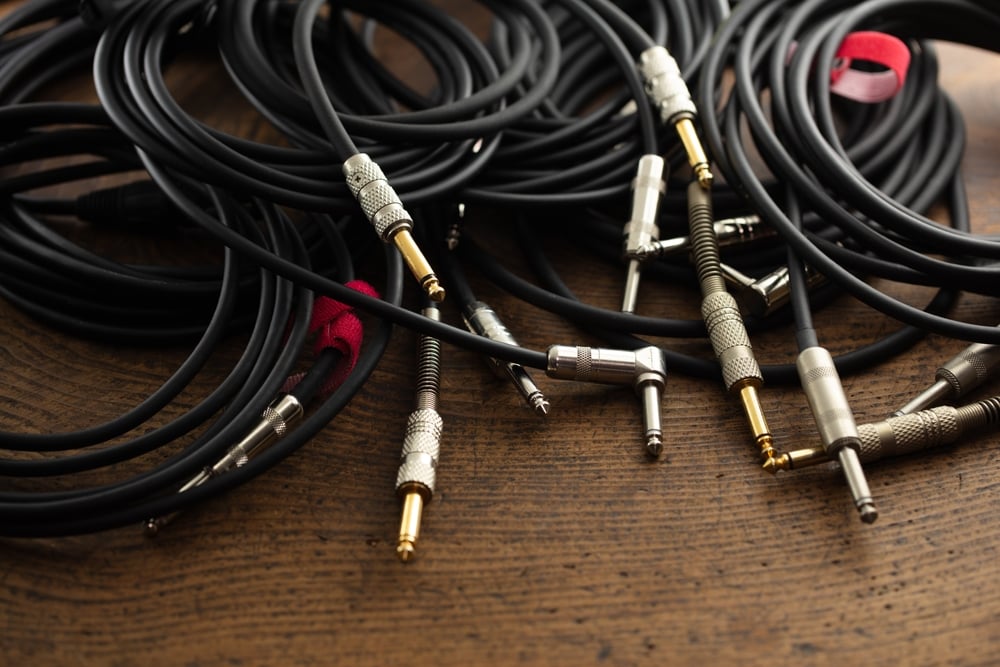
Why Cables Accumulate
Most musicians work with a combination of several types of cables. Signal, power, speaker, and data lines, often of different lengths and terminations, are gradually added to a single set. As equipment expands, new pieces are added, but the method of routing cables remains unchanged. The result is an improvised connection in which it is increasingly difficult to quickly identify which cable belongs to a specific device or signal path.
Basic Types of Cables in Music Equipment
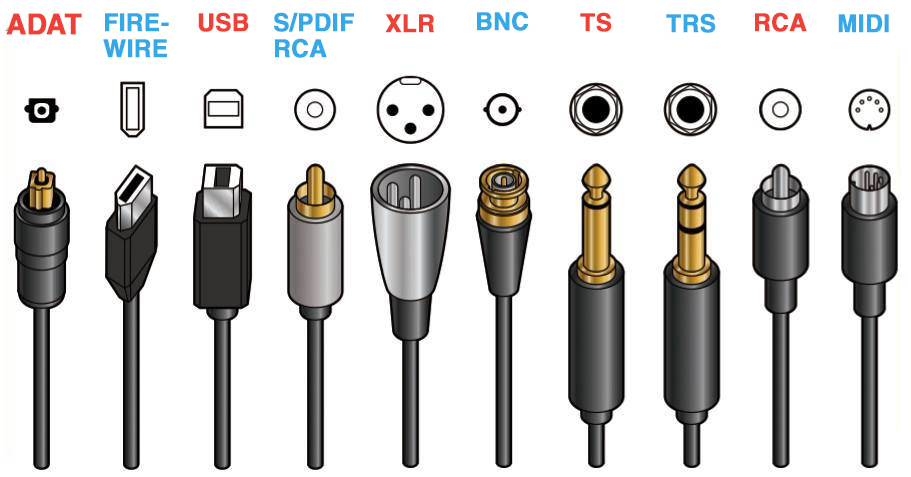
If you want order in your cables, the key is to maintain an overview of their connections. In practice, analog and digital lines are most often combined – for example, instrument cables to an amplifier, XLR cables to microphones, and USB or MIDI cables to a sound card. This group also includes various connectors and adapters, which allow devices with different types or sizes of connectors to be interconnected.
| Cable Type | Purpose | Typical Characteristics | Risks of Mess |
| Signal cables | Audio transfer between devices | Sensitive to interference, various lengths | Noise, hum, damaged connectors |
| Power cables | Electricity supply | Thicker, less flexible | Pulling on connectors, overheating |
| Speaker cables | Connection of amp and speaker cabinet | Higher conductor cross-section | Incorrect connection, mechanical damage |
| Data cables | MIDI, USB, digital connections | Specific connectors, shorter lengths | Loss of functionality, incompatibility |
When you divide cables by function, further organization is easier and the risk of them getting tangled with each other is reduced.
Separation of Signal and Power
One of the basic principles of clear wiring is the physical separation of signal and power cables. Running them in close parallel proximity can increase the risk of interference and hum, especially with longer analog lines and powerful equipment. In practice, a separate route is used for the audio signal and a separate one for power. In home studios, this often means running audio cables along one side of the desk and power or extension cables along the other. Such a division improves clarity and signal stability.
Proper Coiling and Storage of Cables
Improperly coiled cables wear out faster and tend to tangle. A common mistake is tight wrapping around the arm, twisting the conductor against its natural direction, or sharp bends at the connectors. A technique of even coiling without twisting the conductor is used, which preserves the natural shape of the cable. For storage, simple cable ties and clamps help keep bundles together and reduce the risk of tangling.
For guitar or bass effects, it is practical to use a pedalboard where cables are routed along a fixed path and fixed using organizers directly on the pedalboard. There are also ready-made sets designed directly for pedalboards, which help organize cables and the effects themselves into one compact unit.
Labeling and Visual Orientation
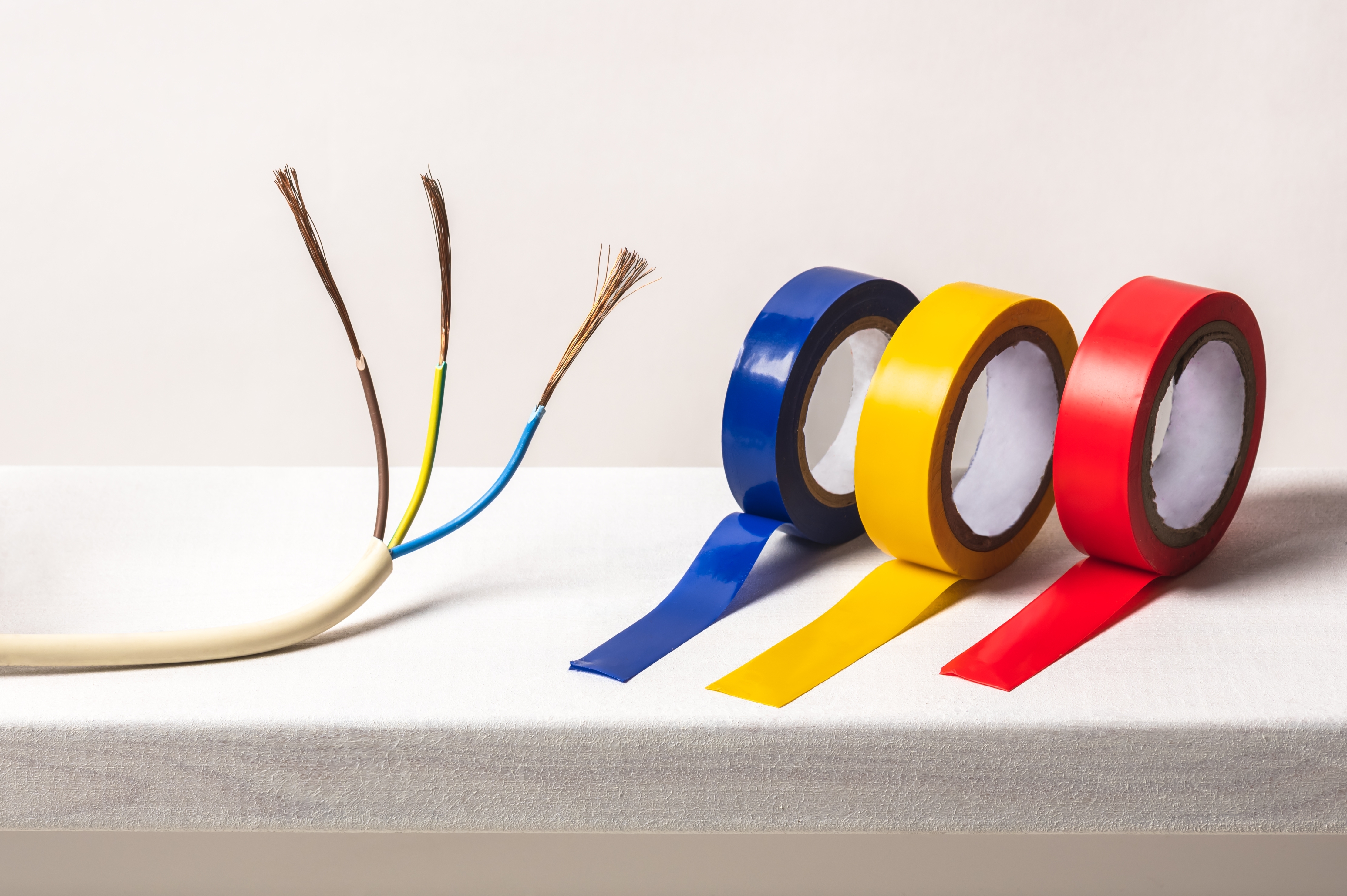
Labeling cables is one of the most effective ways to avoid chaos in complex setups. Colored adhesive tapes or labels on connectors allow you to quickly identify where the cable leads and what it is used for. This system is especially useful for sets that are frequently assembled and disassembled, such as stage sound systems or multi-channel recording. Even in a small studio, simple labeling of cables for monitors, instrument inputs, and microphones helps to clarify which cable belongs to which device.
Fixed Cable Routing in Space
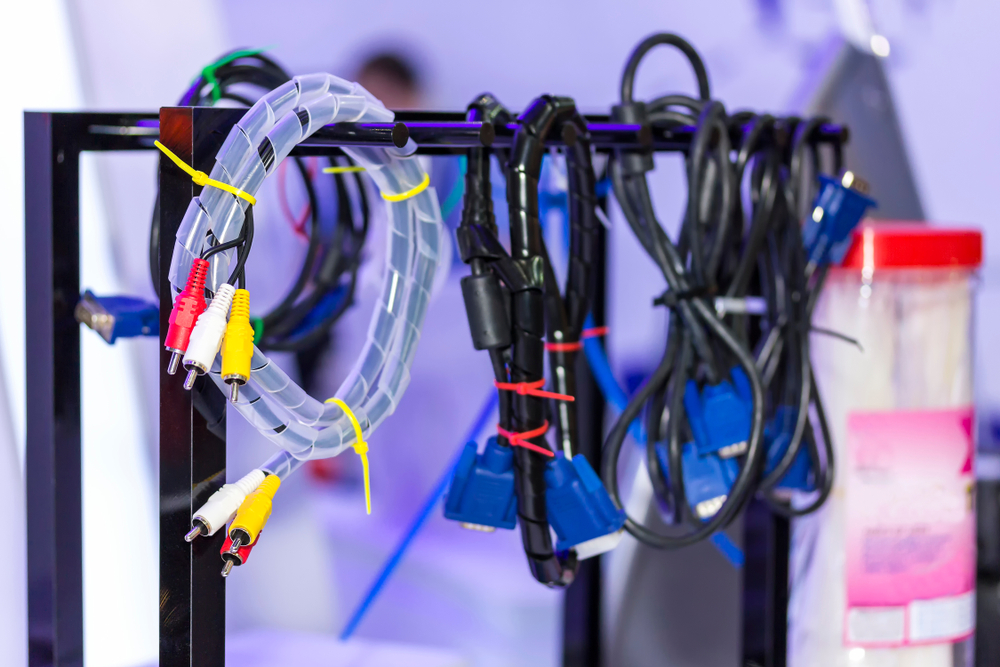
For permanent studio or workspace setups, it pays to plan cable routing in advance. Mounting under the desk, along walls, or in racks reduces the risk of mechanical damage and improves access to equipment. Various holders, strips, and simple organizers are used, allowing cables to be routed in a line without sharp bends and loose hanging cabling. It is important to leave a length reserve so that cables are not unnecessarily strained when handling devices.
Regular Inspection and Reduction
Maintaining order also includes regular inspection of the condition of cables. Unused, damaged, or redundant pieces increase clutter and can cause signal interruptions or interference. A clear setup contains primarily or only those cables for which you immediately know what they are used for in the current set. Others should be stored separately according to type and length, for example, in cases or accessory bags. A short visual inspection when packing or setting up equipment helps to detect loose connectors, damaged insulation, or bent parts in time.
Less Chaos, More Focus
Organized cables do not just bring visual order. They help reduce stress during connection, speed up preparation for playing or recording, and simultaneously minimize the risk of technical problems. Even basic steps, such as separating cable types, labeling, proper coiling, and firmer routing in space, significantly improve comfort when using music technology in a home studio and on stage.
FAQ
Why is it important to address cable order?
Cluttered wiring increases the risk of cable damage, signal interference, tripping, and slows down work with equipment during rehearsals, recordings, and concerts.
Should signal and power cables be run separately?
Yes. Separate routing reduces the risk of interference and hum and improves the clarity of the connection, which is especially important for longer audio lines and powerful amplifiers.
How often does it make sense to check cables?
Regular inspection is suitable especially with frequent moving or changes in wiring. It helps to detect mechanical damage, loose connectors, and redundant pieces.
Does labeling cables help even in a small studio?
Yes. Even with a smaller amount of equipment, it simplifies orientation and reduces the probability of confusion between individual signals.
Does cable order affect sound quality?
Indirectly, yes. Properly routed and undamaged cables reduce the risk of noise, hum, and signal drops, thereby contributing to stable sound quality.