 Albania
 Argentina
 Australia
 Austria
 Belgium
 Bosnia and Herzegovina
 Brazil
 Bulgaria
 Canada
 Chile
Chile
 Colombia
 Croatia
 Czech Republic
 Denmark
 Estonia
 Finland
 France
 Germany
 Greece
 Hungary
 Ireland
 Italy
Italy
 Latvia
 Lithuania
 Luxembourg
 Mexico
 Moldova
 Montenegro
 Netherlands
 New Zealand
 North Macedonia
 Norway
 Philippines
 Poland
 Portugal
 Romania
 Serbia
 Slovakia
 Slovenia
 South Africa
 Spain
Spain
 Sweden
 Switzerland
 Turkey
 Ukraine
 United Kingdom
 United States of America



Keys
Keyboard instruments range from simple first-lesson models to instruments built for gigs, sound design and recording. Start with where you will play, how you want the keybed to feel and whether you need built-in speakers—not with the length of the feature list. Piano technique calls for the right action and range, while band use puts more weight on portability, quick controls and suitable outputs. A well-chosen instrument gives you room to progress without making you pay for tools you will not use.
How to choose a keyboard instrument
Define the main use first: practice at home, lessons, the stage or the studio. Then compare the keybed, controls, sounds and connections. Accompaniment styles and extra effects come later.
- Playing situation: learning, home practice, live performance or production.
- Keybed feel: light synth action, semi-weighted action or hammer action.
- Range: a smaller instrument travels easily; a full range leaves more room for piano playing.
- Monitoring: built-in speakers simplify home use, while a stage setup normally connects to a sound system.
- Connections: check headphones, pedals, audio outputs, USB and MIDI for your workflow.
For a portable first instrument with accompaniments and speakers, explore keyboards. The guide How to choose a keyboard takes you through the decision in more detail.
Types of keyboard instruments
These groups differ in more than their names. Each balances key action, sounds, controls and mobility differently. Use the table to narrow the field before comparing individual models.
| Type | Best suited to | Keybed | Sounds | Typical use |
|---|---|---|---|---|
| Keyboard | Beginners, families and players who want accompaniments | Often light and portable | Instrument sounds, rhythms and accompaniments | Home, lessons and entertainment |
| Digital piano | Piano students and piano-focused players | Usually hammer action, often full range | Emphasis on acoustic and electric pianos | Practice, lessons and home playing |
| Stage piano | Performing keyboard players | Light to hammer action depending on repertoire | Stage-ready pianos, organs and layers | Stage, rehearsal room and PA systems |
| Synthesizer / workstation | Sound designers, producers and arrangers | Various actions and ranges | Synthesis and editing; workstations add arranging tools | Studio, production and live performance |
Digital pianos focus on piano feel and practical home practice. Stage pianos are designed for performance and often rely on external amplification. Synthesizers and workstations support sound creation, while dedicated workstations add composition and arranging features.
Other branches of the keyboard family
If you want a natural acoustic sound and have suitable space, compare pianos too. The wider family also includes accordions, wind-powered melodicas and organs. Their sound production and playing techniques differ, so treat them as distinct instrument groups rather than substitutes for a keyboard or digital piano.
Choosing for home, lessons, stage and studio
Playing at home
Built-in speakers, a headphone output and self-contained controls make home use easier. Measure room for the instrument, stand and a healthy seating position. If you pack it away after playing, weight and quick setup matter as much as sound.
Lessons
Ask the teacher about the recommended number of keys and action. Velocity sensitivity helps develop control of volume and expression; a stable stand and suitable pedal support good technique. A metronome and recording can aid practice, but cannot replace an appropriate keybed.
Stage and rehearsal room
Fast sound access, readable controls, dependable switching and suitable PA outputs matter at a gig. Consider transport, a protective case and setup time. If you move between piano, organ and synth parts, choose an instrument that changes sounds without lengthy menu work between songs.
Studio and music production
Decide whether you need finished sounds inside the instrument or mainly a controller for software. USB and MIDI carry control data; audio outputs carry the instrument's sound. For a synthesizer, examine the synthesis and editing workflow. For a workstation, focus on sequencing, layers and arrangements.
Keybed: velocity, action and number of keys
Velocity sensitivity and action
A velocity-sensitive keybed reacts to how firmly you play. Light action suits fast synth or organ parts and keeps weight down. Semi-weighted action adds resistance, while hammer action moves closer to an acoustic piano feel but is usually heavier. The best action follows your repertoire, not a “professional” label.
How many keys do you need?
A shorter range saves space and suits travel, simple lines or software control. A larger range gives both hands room and reduces octave switching. Full range is a natural fit for piano repertoire; a compact keybed may make more sense for stage or studio work. Base the choice on the music you actually play and the space you can transport.
Sounds, speakers and connections
Sound set and speakers
The number of presets does not tell you how useful an instrument will be. Check whether its core sounds suit your music, how quickly you can layer or split them and how effects are controlled. Built-in speakers are handy at home. A stage or studio setup often uses a PA or monitors, so confirm that the instrument has appropriate audio outputs.
Headphones, pedals, USB and MIDI
Check the type and position of the headphone socket. A sustain-pedal input is fundamental for piano playing, while some models also support multi-pedal units or an expression pedal. Depending on the model, USB may carry MIDI, audio or both. Traditional MIDI ports remain useful for connecting hardware without a computer. List every device you intend to connect before buying.
Practical pre-purchase checklist
- Choose one main use and two features you cannot do without.
- Select the action for your repertoire and piano-technique goals.
- Check the key count, dimensions, weight and available space.
- Decide whether you need speakers, headphones or external amplification.
- Confirm pedal, USB, MIDI and audio connections.
- Try the controls: essential sounds and settings should be quick to reach.
- Budget for a stand, bench or stool, pedal, case and cables.
If two instruments seem close, return to the main job: piano playing, accompaniments, stage work or sound creation. The model that does that comfortably with the right keybed and connections is usually a better choice than one with a longer feature list.

Key Instruments for Beginners
Deals Keys
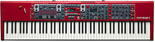
Unboxed: Keys
Bundles: Keys
Create a Set - Keys
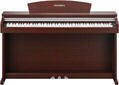
Digital Pianos

Digital Grand Pianos
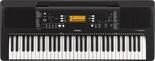
Keyboards
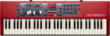
Stage Pianos
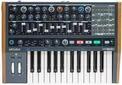
Synthesizers and Workstations
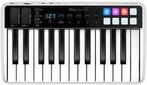
MIDI Master Keyboards
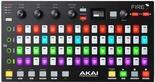
MIDI Controllers
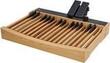
MIDI pedalboards
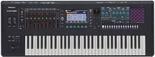
Workstations

Pianos
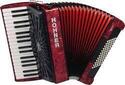
Accordions
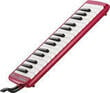
Melodicas
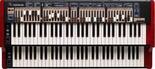
Electric Organs
Folding Keyboards
Keyboard Instruments For Kids
Keyboards with learning system
Keyboard Amps
Accessories for Keys

Keyboard Stands
Piano Benches and Stools
Sheet music for piano

Metronomes
Popular Brands

Novation Keys

Nux Keys

Kurzweil Keys

Korg Keys

Roland Keys

Yamaha Keys

Casio Keys

NORD Keys

Alesis Keys

Kawai Keys

IK Multimedia Keys

Mukikim Keyboards

SENCOR Keys

Konig & Meyer Keys

Akai Keys

Native Instruments Keys

M-Audio Keys
Nux Digital Pianos

Behringer Keys

Arturia Keys

Teenage Engineering Keys

MOOG Keys

Nektar Keys

Pianonova Accessories for Keys

RockBag Keys

Laney Keyboard Amps

Gator Accessories for Keys

Madarozzo Bags for Keyboards

Stagg Keys

Vox Keys

GEWA Keys

Waldorf Synthesizers and Workstations

iCON Keys

WTF Accessories for Keys

Studiologic Keys

Soundking Accessories for Keys

Bespeco Keys

Decksaver Accessories for Keys

JASPERS Accessories for Keys


