 Albania
 Argentina
 Australia
 Austria
 Belgium
 Bosnia and Herzegovina
 Brazil
 Bulgaria
 Canada
 Chile
Chile
 Colombia
 Croatia
 Czech Republic
 Denmark
 Estonia
 Finland
 France
 Germany
 Greece
 Hungary
 Ireland
 Italy
Italy
 Latvia
 Lithuania
 Luxembourg
 Mexico
 Moldova
 Montenegro
 Netherlands
 New Zealand
 North Macedonia
 Norway
 Philippines
 Poland
 Portugal
 Romania
 Serbia
 Slovakia
 Slovenia
 South Africa
 Spain
Spain
 Sweden
 Switzerland
 Turkey
 Ukraine
 United Kingdom
 United States of America



How to learn to play the piano – A step-by-step guide for complete beginners
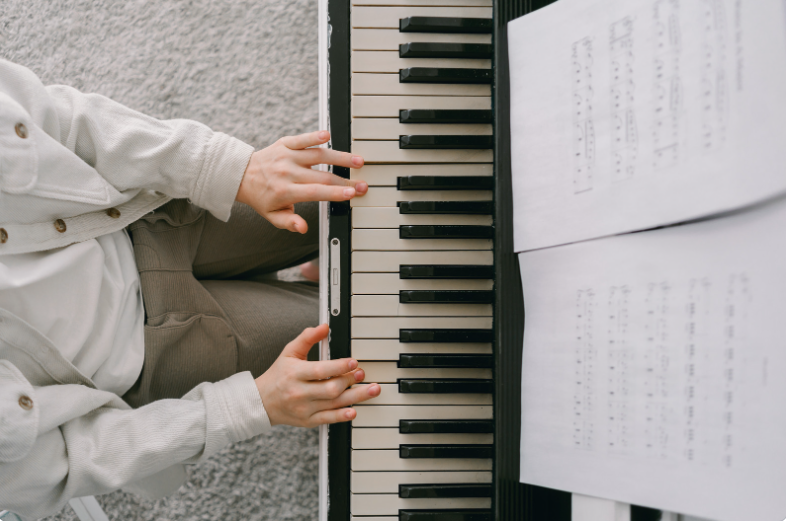
Do you want to learn to play the piano but don’t know where or how to start?
The good news is that you don’t need music school, an accompanist, years of theory, or an expensive instrument. All you need is basic equipment, a clear goal, and a step-by-step plan. This practical guide will show you how to move from complete beginner to your first pieces in a month.
What do you need to start?
First, the instrument
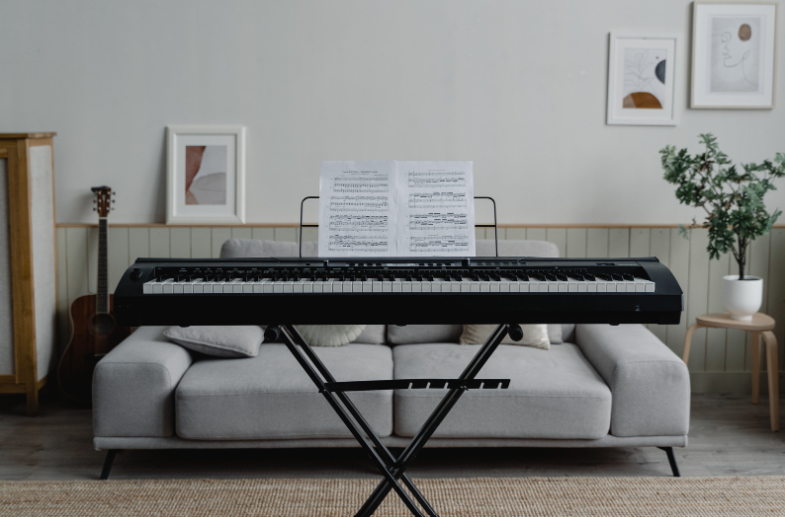
If you are a beginner, we recommend a digital piano with 88 keys and touch sensitivity. For around €500–800, you get an instrument that closely resembles the feel of an acoustic piano, but doesn’t take up much space, doesn’t need tuning, and allows you to practice with headphones.
A cheaper alternative is a keyboard (approx. €100–300), which usually has 61 keys but lacks touch sensitivity. If your goal is simple melodies or playing for fun, it’s enough. On the other hand, save the classical acoustic piano for later – right now it would only complicate the beginning.
Set a goal that will drive you forward
Why do you want to learn to play?
Do you want to play a favorite song? Relax after work? Surprise someone with a live piece? Clearly state your goal – it will help on days when you don’t feel like practicing. Music is about emotions, and when you know why you play, you will have more endurance.
First week: get to know the keyboard and play your first scale
Start slowly. In the first days, just get to know the keys – notice the groups of two and three black keys. Finding the C key is simple: it’s always the white key immediately to the left of the group of two black keys.
Learn the musical alphabet (C–D–E–F–G–A–B–C) and practice it going both right and left.
After a few days, you can move on to playing the C major scale with one finger of your right hand – for example, your middle finger. Play each note slowly and clearly. Then play it with your left hand. Finally, play both hands together – the same notes simultaneously. It will be a challenge, but this is exactly where coordination starts to develop.

Second week: learn basic chords and your first melody
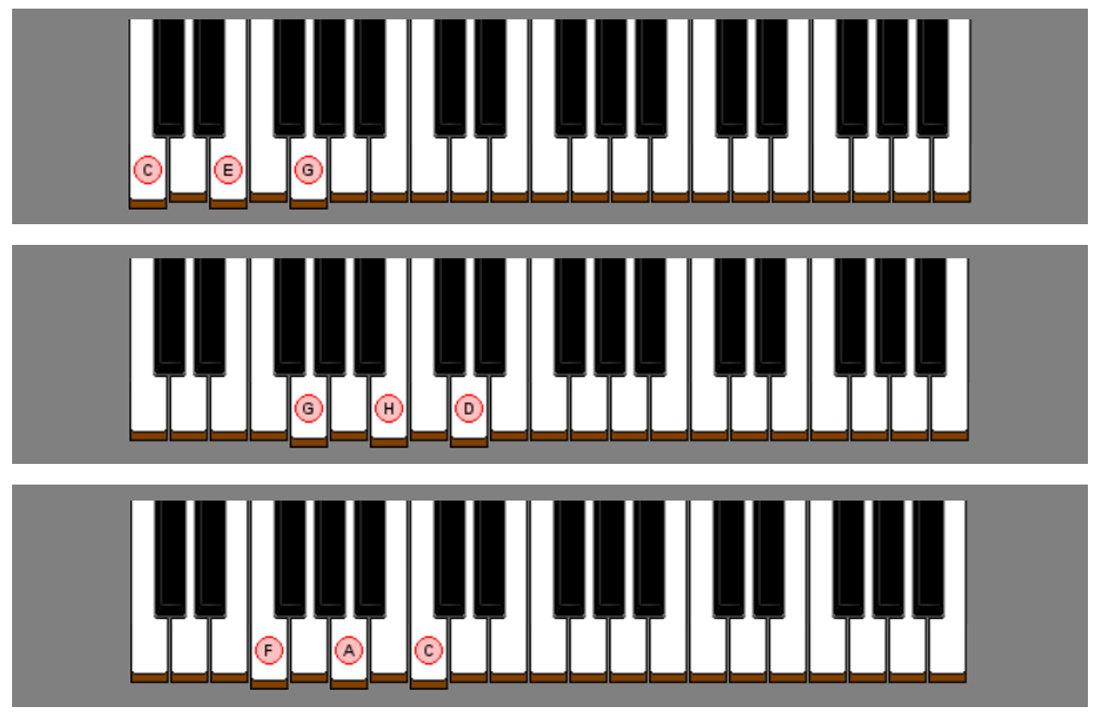
Now it’s time to add your left hand to the work – and that’s chords. Start with the three most important:
- C major (C–E–G)
- G major (G–B–D)
- F major (F–A–C)
Third week: rhythm, coordination, and slow playing
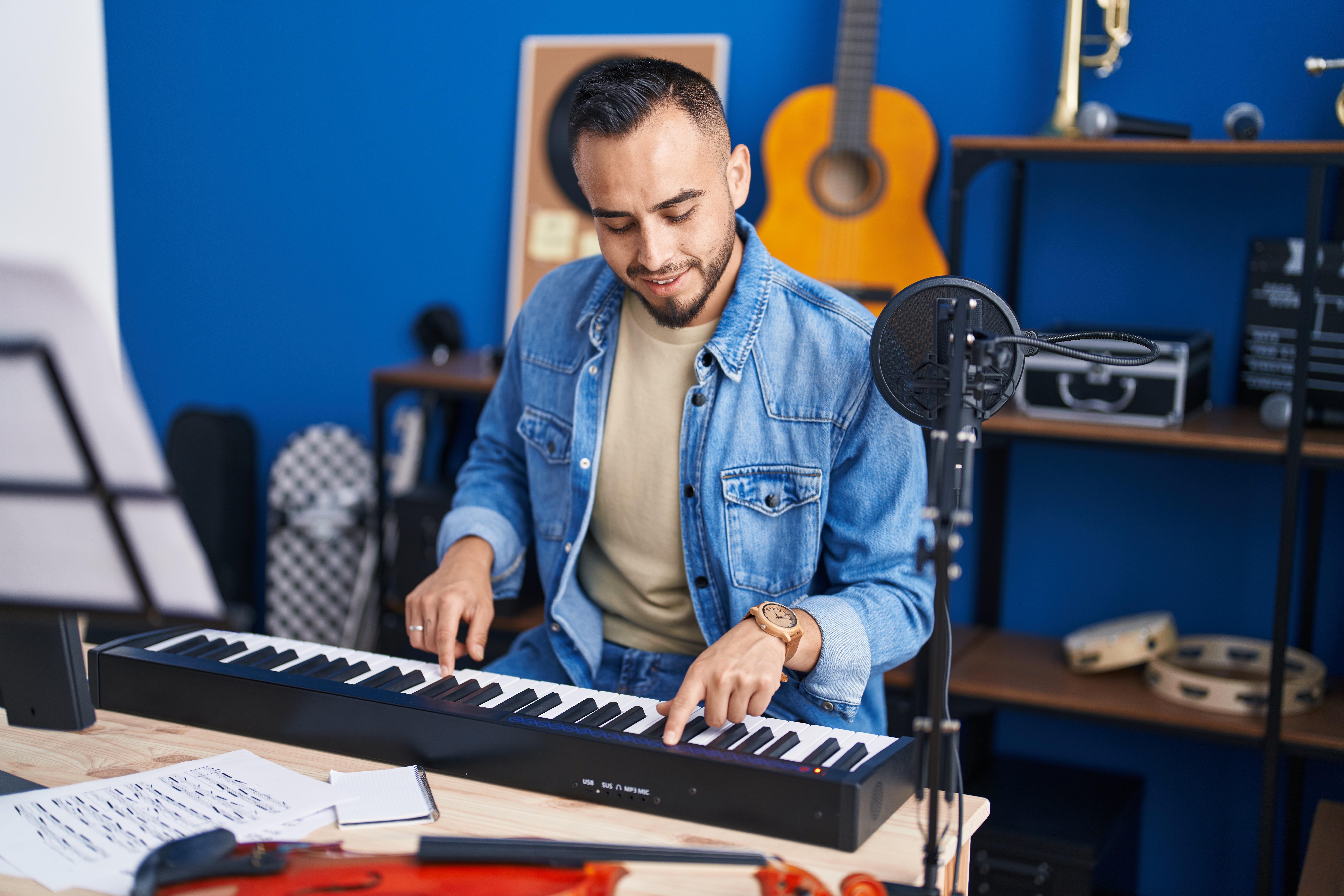
Combining both hands is often the hardest phase, so don’t be afraid to go very slowly. Practice each hand separately, then try to combine them. Focus more on accuracy than speed. Right now you are building habits that will stay with you. A metronome can also help – start at 60 beats per minute and stick to it.
Fourth week: first familiar songs
If you’ve practiced regularly, you now have the basics under your fingers. You can start simple pieces such as:
- Yesterday (The Beatles)
- Can't Help Falling in Love (Elvis Presley)
- Havana (Camila Cabello)
How much to practice daily?
For beginners, 15–20 minutes a day is enough, ideally 5–6 days a week.
If you manage it, you can increase to 30–40 minutes.
But remember: it’s better to play 15 minutes a day than one hour once a week. Music is about consistency and habits.
Practical tips to help you keep going
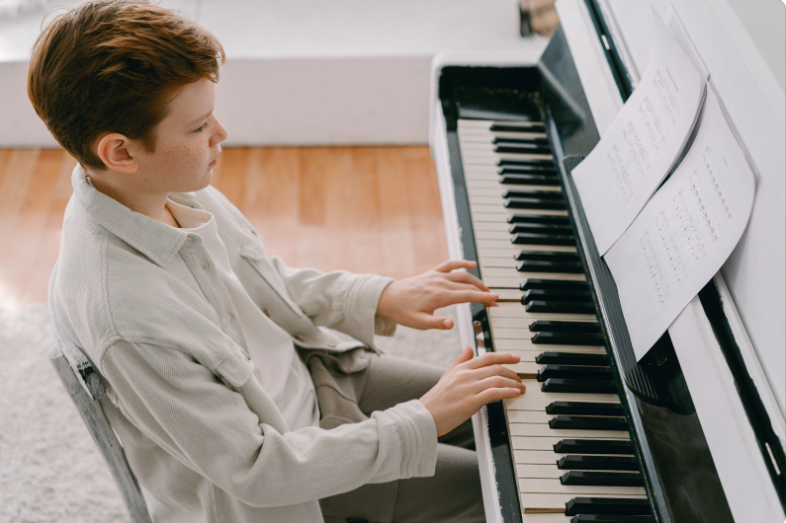
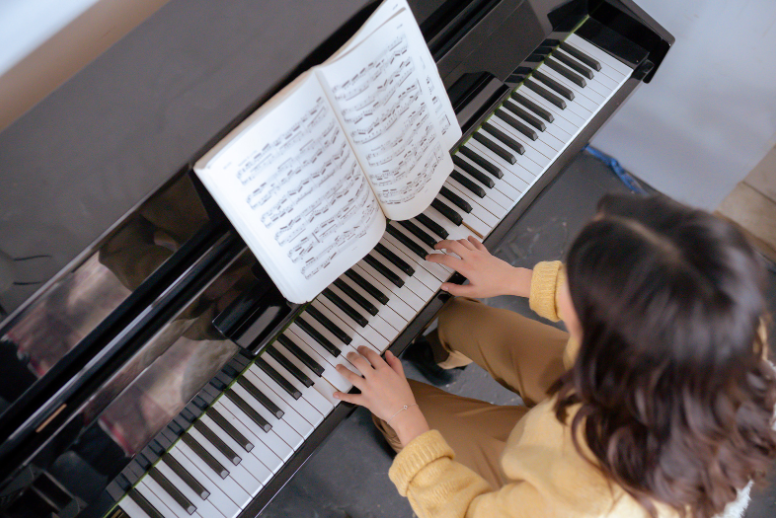
- Sit properly: feet on the floor, back straight, wrists slightly above the keys.
- Play slowly: if you can’t play slowly, you can’t play fast either.
- Divide your practice: for example 5 minutes scales, 5 minutes chords, 10 minutes pieces.
- Use a metronome: from the start you are building rhythm – and that is the foundation of everything.
What will you know after a month?
After 4 weeks of regular practice, you will be able to:
- Play basic chords (C, G, F)
- Play simple melodies with your right hand
- Combine both hands in simple pieces
- Navigate the keyboard
- Start reading basic sheet music
How not to lose motivation?
Celebrate small achievements – even if you play just one new chord.
Record your progress and compare after a week.
Play songs you love – they will give you the energy to continue.
And most importantly: be patient. Don’t compare yourself to others. You are going at your own pace, and every day you sit at the piano moves you forward.
When you get stuck, these tricks will help:
- Slow down the tempo by half.
- Practice each hand separately.
- Divide the piece into smaller sections.
- Take a day off – your mind needs rest too.
Learning to play the piano is not rocket science. With 15 to 20 minutes a day and this specific plan, you can manage your first real pieces within a month. The key is consistency, not perfection. Start today – your first C major is waiting for you.
Photo: Shutterstock, Canva, Pexels
Frequently Asked Questions About Learning Piano
How long does it take to learn to play the piano?
It depends on your goal and daily discipline. If you practice 20–30 minutes a day, you'll play your first simple songs within 4–6 weeks. Fluent playing with a basic repertoire usually takes 6–12 months. Professional-level playing requires years of practice, but playing for fun is achievable surprisingly quickly.
Do I need an acoustic piano or is a digital piano enough?
For a beginner, a digital piano is fully sufficient and has several practical advantages: it needs no tuning, you can control the volume with headphones, and it takes up less space. The key is to have at least 61 keys with touch sensitivity, ideally 88 weighted keys that simulate a real piano. Browse our range of digital pianos and keyboards at Muziker.
Do I need to know how to read music to learn piano?
It's not a requirement, but it will help significantly. You can play by chords or videos without reading music, but reading notes opens up a much larger repertoire and will speed up your progress. We recommend learning the basics of music notation alongside playing, ideally from the very start.
How many minutes a day should a beginner practice?
Short and regular practice sessions are more effective than long and irregular ones. The ideal is 20–30 minutes every day. At this frequency, your brain builds both muscular and musical memory patterns much more efficiently than practicing for an hour once every three days.
Is it better to have a teacher or can I learn on my own?
Both work, but they differ in speed and quality of results. A teacher immediately corrects bad habits before they become ingrained, saving time in the long run. Self-teaching through YouTube videos and apps is possible, but without feedback you may develop incorrect hand positions. The ideal combination is a few lessons with a teacher at the beginning, plus independent practice.
What is the best age to start playing the piano?
There is no wrong age. Children usually start around ages 5–7 because their brains are still developing and motor skills improve rapidly. Adults have the advantage of greater discipline and the ability to understand theory. You can start piano at any age with equally good results if you commit fully.
What piano is suitable for a complete beginner?
For a beginner, we recommend a digital piano with 88 weighted keys and polyphony of at least 64 voices. Reliable beginner options include models from the Yamaha P, Casio CDP, or Roland FP series. Browse the full range of digital pianos at Muziker with filtering by key count and price.
What songs are recommended for complete beginners?
Start with simple melodies you know well: Happy Birthday, Ode to Joy (Beethoven), Für Elise (the opening theme), or popular songs with simple chords. More important than the specific song is that you enjoy it, because motivation is key to learning.