 Albania
 Argentina
 Australia
 Austria
 Belgium
 Bosnia and Herzegovina
 Brazil
 Bulgaria
 Canada
 Chile
Chile
 Colombia
 Croatia
 Czech Republic
 Denmark
 Estonia
 Finland
 France
 Germany
 Greece
 Hungary
 Ireland
 Italy
Italy
 Latvia
 Lithuania
 Luxembourg
 Mexico
 Moldova
 Montenegro
 Netherlands
 New Zealand
 North Macedonia
 Norway
 Philippines
 Poland
 Portugal
 Romania
 Serbia
 Slovakia
 Slovenia
 South Africa
 Spain
Spain
 Sweden
 Switzerland
 Turkey
 Ukraine
 United Kingdom
 United States of America



How to choose a first violin
The violin is one of the most beautiful musical instruments in the world. How do you choose the right one? A complete guide for beginners and parents.
Why the Violin Is Such an Extraordinary Instrument
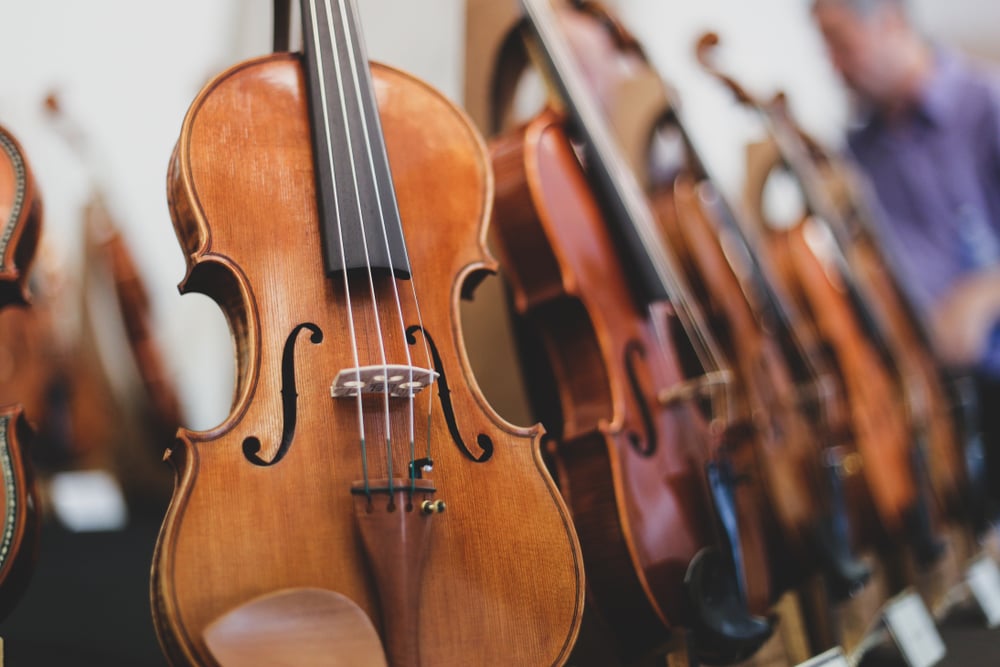
Choosing a violin is a bit like choosing a friend for life. The right instrument will be by your side every step of the way – from those first anxious practice sessions at home to the stage where you finally feel in your element.
The violin is one of the oldest and most prestigious musical instruments in the world. Its rich sound is created by the vibration of four strings, amplified by a wooden resonance box. Behind every great violin lies a strict craft tradition that reveals itself directly in its sound and playability.
If you're considering a purchase for yourself or a child, the decision revolves around four things:
If you're considering a purchase for yourself or a child, the decision revolves around four things:
- Size (depends on arm length and the player's age)
- Acoustic or electric violin
- Player's level – beginner, intermediate, advanced
- Budget – this determines the quality of the instrument and what's included in the set
Acoustic or Electric Violin?
Both types are exceptional and each has its own charm. It all depends on what you – or your child – expect from the violin.
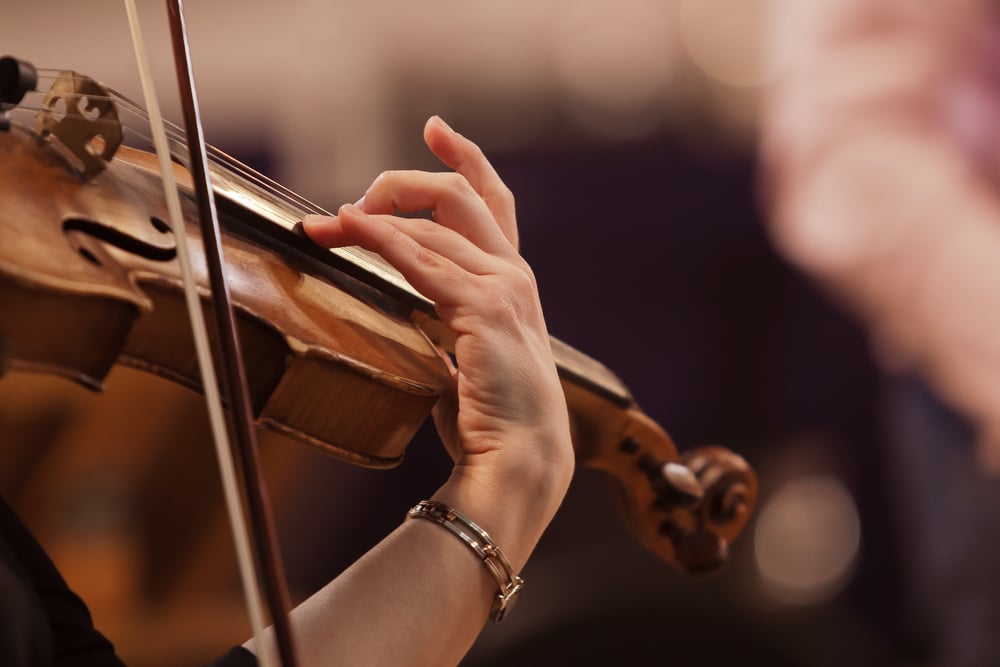
Acoustic violins are the classic choice. No cables, no amplifiers – the sound is created directly in the body of the instrument and fills the whole room. They're ideal for classical training, folk music, and for anyone who wants to play the violin the way it was meant to be played. If you're just starting out, this is almost always the right choice.
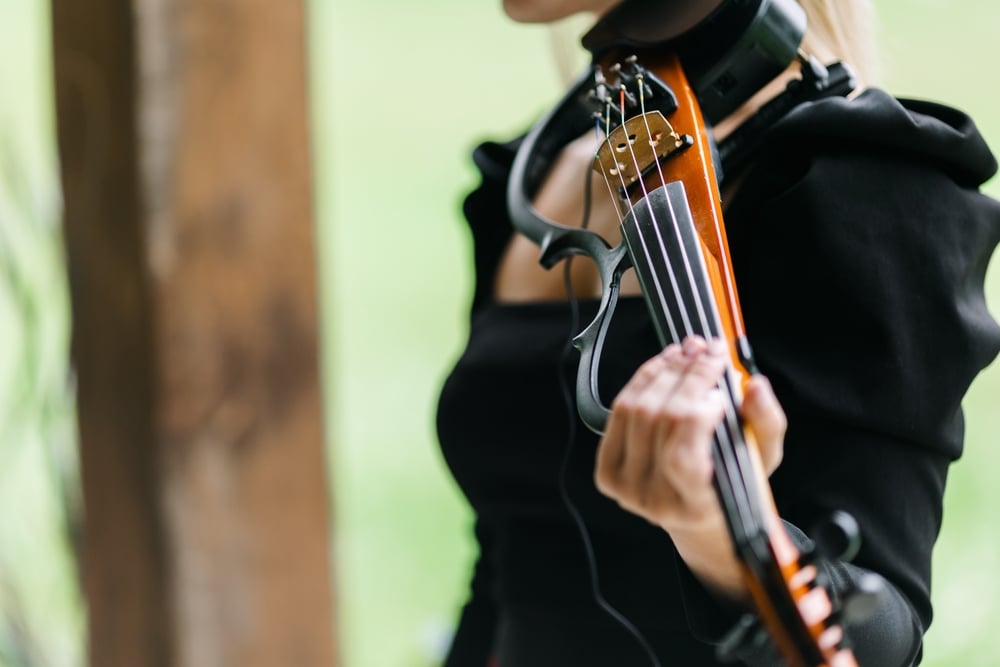
Electric violins are a different category. They have no resonance box, and without an amplifier or headphones, no sound will come out. Their advantage is quiet practice (perfect for apartment buildings) and diverse sound options through effects. They're popular in rock, pop, and western music.
If you're a beginner, go acoustic. If you play in a band, find practice noise bothersome, or are attracted to effects, electric violins are a great choice.
Electric violins are a different category. They have no resonance box, and without an amplifier or headphones, no sound will come out. Their advantage is quiet practice (perfect for apartment buildings) and diverse sound options through effects. They're popular in rock, pop, and western music.
If you're a beginner, go acoustic. If you play in a band, find practice noise bothersome, or are attracted to effects, electric violins are a great choice.
Violin Size – The Most Important Choice
Violin size is not a matter of taste. It's a matter of anatomy. A violin that's too big ruins your technique and makes playing uncomfortable; one that's too small slows down your development. The right size is determined by arm length – from the neck to the wrist.
- 4/4 (full size) – age 12+ and adults | arm length 58 cm+
- 3/4 – children aged 9–11 | arm length 54–58 cm
- 1/2 – children aged 6–8 | arm length 50–54 cm
- 1/4 – children aged 4–6 | arm length 44–50 cm
- 1/8, 1/16, 1/32 – under age 5 | arm length under 44 cm
Violins by Player Level
For Children and Beginners
Your first violin needs to be durable, easy to tune, and sound good even before you've learned proper bow technique. That's why it's important not to buy the cheapest violin without checking the quality of its setup.
When choosing violins for beginners, look for:
See the full range: Latone violins and Latone electric violins.
- String height (action) – low action makes playing easier for little fingers. Cheap violins often have high action, which is frustrating for children.
- Bow included in the set – a good bow is just as important as the violin itself. Most quality beginner sets include one along with rosin and a case.
- Resistance to humidity changes – a violin kept in a child's room needs to withstand varying conditions.
See the full range: Latone violins and Latone electric violins.

For Advanced Players
Once you've mastered the basics and feel that your instrument is starting to hold you back, it's time to reach higher.
Advanced violins feature higher quality wood (spruce and maple), a more precisely crafted fingerboard, and greater sensitivity to the dynamics of your playing. The sound is richer, has more tonal colours, and responds to every movement of the bow. For advanced players, we recommend brands such as GEWA, Hora or Petz. Browse the full range here: Muziker violins.
What Not to Forget When Buying a Violin
The violin itself is just the beginning. Here are the things you can't do without:
- Rosin – a solid resin that you apply to the bow before every practice session. Without it the bow hair slides over the strings and produces no sound. This is not an accessory – it's a necessity.
- Strings – with regular playing, they last 6–12 months. Keeping a spare set handy is a good habit – a string always breaks at the worst possible moment.
- Case or hard case – protects the violin during transport. Most beginner sets include one; for advanced violins, it's worth investing in a solid hard case.
- Clip-on tuner – invaluable for beginners. Violins need tuning fairly often, and without a tuner it's not easy for a newcomer.
FAQ – Most Frequently Asked Questions About Violins
Is it better to buy a violin as a set or separately?
For beginners, definitely as a set. It includes the violin, bow, rosin and case, saving you from unnecessary decisions about compatibility. Sets are also better value than buying individual components.
How much does a good beginner violin cost?
You can find quality violins for a beginner or child from €50 to €200. In this range, Latone violins are the ideal choice – well set up, durable, and with a sound that motivates you to keep playing. We recommend more expensive violins (€200–€500) only once the player shows a commitment to continuing.
How long does it take to learn to play the violin?
Most children can play their first melodies after 2–3 months of regular practice. Fluent playing takes years – but that's true of any instrument. The key is consistency: 15–20 minutes a day is better than an hour once a week.
Is learning violin as an adult beginner worthwhile?
Absolutely. Adults often learn faster than children because they understand what they're practising and why. Start with a 4/4 violin and ideally take at least a few lessons with a teacher – correct technique from the start saves a lot of frustration later.
What is rosin and why do I need it?
Rosin is a solid resin applied to the bow. Without it the bow hair slides over the strings and produces no sound. Just a few strokes before each practice session is enough.
For beginners, definitely as a set. It includes the violin, bow, rosin and case, saving you from unnecessary decisions about compatibility. Sets are also better value than buying individual components.
How much does a good beginner violin cost?
You can find quality violins for a beginner or child from €50 to €200. In this range, Latone violins are the ideal choice – well set up, durable, and with a sound that motivates you to keep playing. We recommend more expensive violins (€200–€500) only once the player shows a commitment to continuing.
How long does it take to learn to play the violin?
Most children can play their first melodies after 2–3 months of regular practice. Fluent playing takes years – but that's true of any instrument. The key is consistency: 15–20 minutes a day is better than an hour once a week.
Is learning violin as an adult beginner worthwhile?
Absolutely. Adults often learn faster than children because they understand what they're practising and why. Start with a 4/4 violin and ideally take at least a few lessons with a teacher – correct technique from the start saves a lot of frustration later.
What is rosin and why do I need it?
Rosin is a solid resin applied to the bow. Without it the bow hair slides over the strings and produces no sound. Just a few strokes before each practice session is enough.
Your Violin Is Waiting
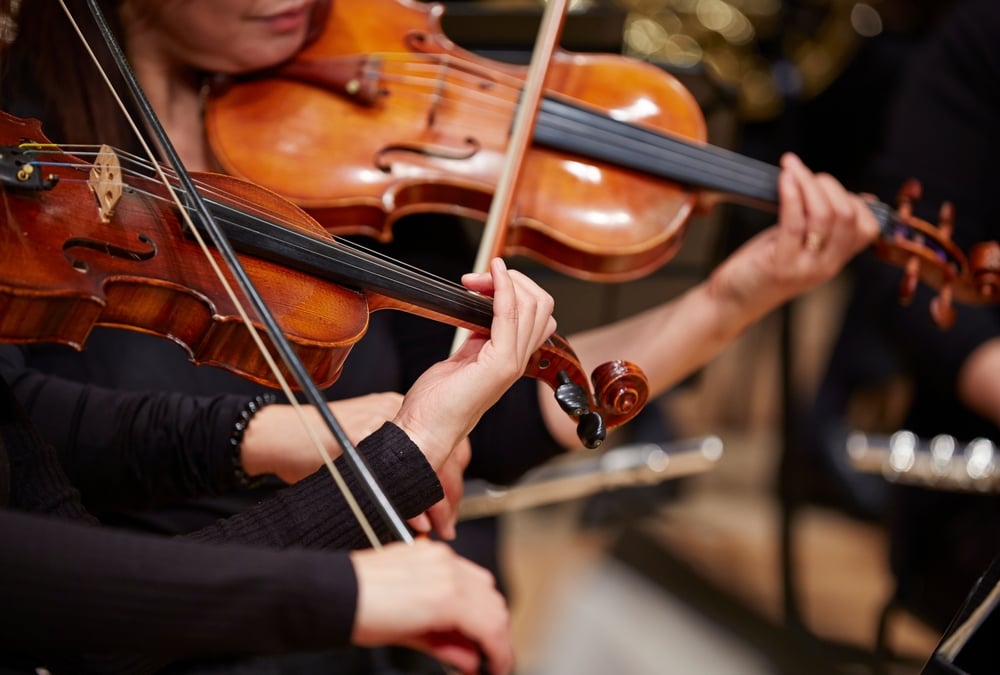
The violin is an instrument that speaks to the soul – even when you're still playing your very first notes. Now that you know what you're looking for, all that's left is one step: choose and begin. Browse the full range of violins at Muziker. And if you're looking for a perfect stress-free start, Latone violins are waiting for you.