 Albania
 Argentina
 Australia
 Austria
 Belgium
 Bosnia and Herzegovina
 Brazil
 Bulgaria
 Canada
 Chile
Chile
 Colombia
 Croatia
 Czech Republic
 Denmark
 Estonia
 Finland
 France
 Germany
 Greece
 Hungary
 Ireland
 Italy
Italy
 Latvia
 Lithuania
 Luxembourg
 Mexico
 Moldova
 Montenegro
 Netherlands
 New Zealand
 North Macedonia
 Norway
 Philippines
 Poland
 Portugal
 Romania
 Serbia
 Slovakia
 Slovenia
 South Africa
 Spain
Spain
 Sweden
 Switzerland
 Turkey
 Ukraine
 United Kingdom
 United States of America



Top 10 albums that defined seventies punk
Punk was not born in a studio or at a conservatory. It was born in a dive bar on the Bowery and in London rehearsal rooms where nobody could really play. These are the ten albums that turned it into a genre.
Punk did not start with a manifesto. It started with impatience. A few people stopped waiting for someone to let them on a stage and built their own.
Literally. In March 1974 a New York band got permission to play in a run-down bar on the Bowery and had to knock the stage together themselves. The band was Television, the bar was CBGB and their Sunday nights grew into the whole American scene. Two years later the same thing was happening in London. A few dozen people stood at the first Sex Pistols shows and a good part of them had their own band within six months.
Technically punk was a step backwards and that was the whole point. Two minutes instead of ten minute songs. Three chords on a cheap electric guitar and a small amp turned all the way up instead of solo wizardry. The bass did not play melodic lines, it played eighth notes. The drums held the tempo and nothing more was asked of them. Records were made fast because there was no money for long studio sessions, and that is exactly when it turned out that a week is enough to make an album that lasts fifty years.
We picked ten albums that seventies punk really stands on. We go from number ten to number one, so the strongest one is waiting for you at the end. You will find all of them on vinyl and on CD.
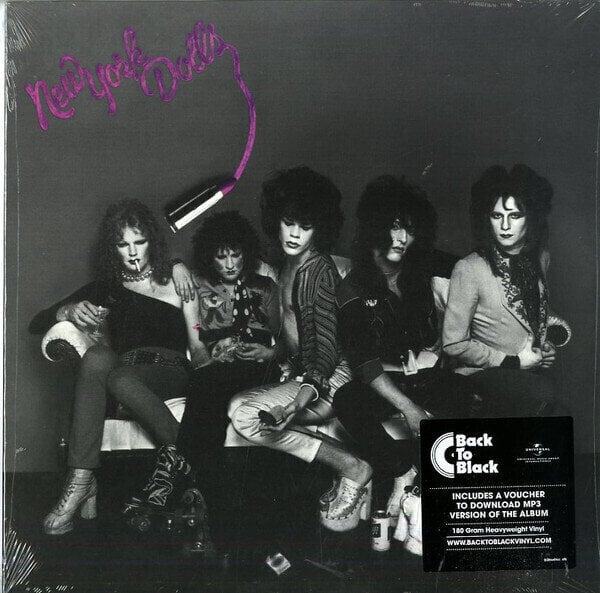
10. New York Dolls – New York Dolls (1973)
Before punk was called punk, there were the New York Dolls. Five men in high heels playing rock and roll so loud and so sloppy that it fit nowhere else. Their debut came out on 27 July 1973 on Mercury. They recorded it at Record Plant in eight days and it was mixed in half a day. Todd Rundgren produced it and thought the band were amateurs, which is probably why everything on the record sounds exactly the way they played it live.
Personality Crisis, Trash and Jet Boy sound like the Rolling Stones after a week without sleep. The guitars of Johnny Thunders and Sylvain Sylvain shout over each other, David Johansen sings like intonation is somebody else's problem, and the whole thing is held together by pure nerve. Critics did not know what to do with it and the record barely sold. Three years later every new band in New York and London had a copy.
Fun fact: original drummer Billy Murcia died in 1972, before the debut was recorded, and Jerry Nolan took his place. The band was later managed by Malcolm McLaren, the same man who then put the Sex Pistols together.
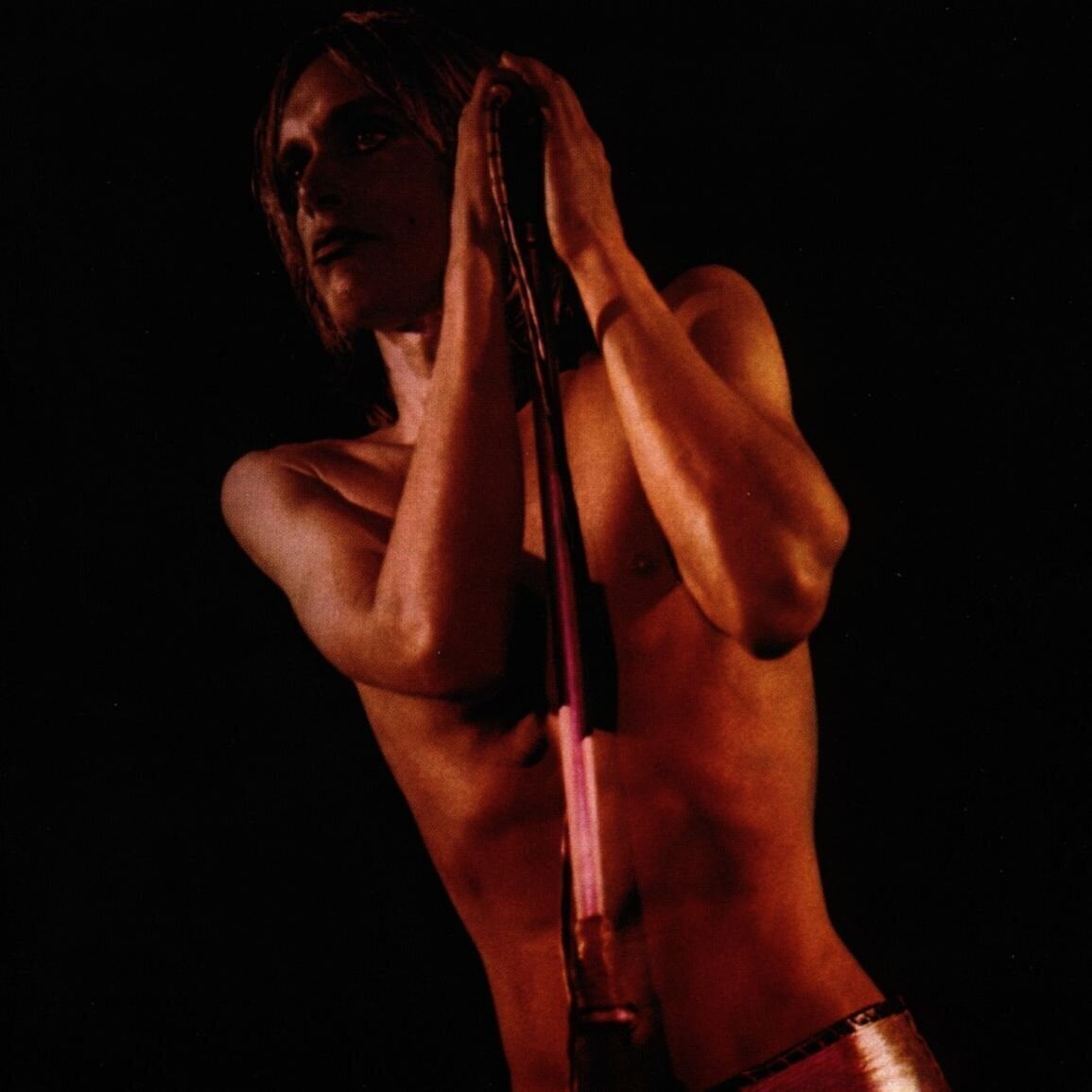
9. Iggy and the Stooges – Raw Power (1973)
If anyone in 1973 sounded like punk before punk existed, it was The Stooges. Their third album came out on 7 February 1973 on Columbia, they recorded it in London at CBS Studios, and the whole thing rests on Iggy Pop and guitarist James Williamson. They wrote most of the songs together. Williamson's tone, dry and with no air in it, is still the reference when somebody has to explain how a guitar through a properly overdriven channel should sound.
Search and Destroy opens the album with a riff that half of London rewrote four years later. Gimme Danger shows the other side, slow and creeping, where the tension rises instead of the volume. The album flopped at the time and the band fell apart shortly after it. The Sex Pistols and The Damned later named it as their textbook.
Fun fact: the record exists in two official mixes. The original 1973 one was done by David Bowie, who also got the band their Columbia deal after the label rejected the band's own raw mix. In 1997 Iggy Pop remixed the album himself and the argument over which version is better has never stopped.
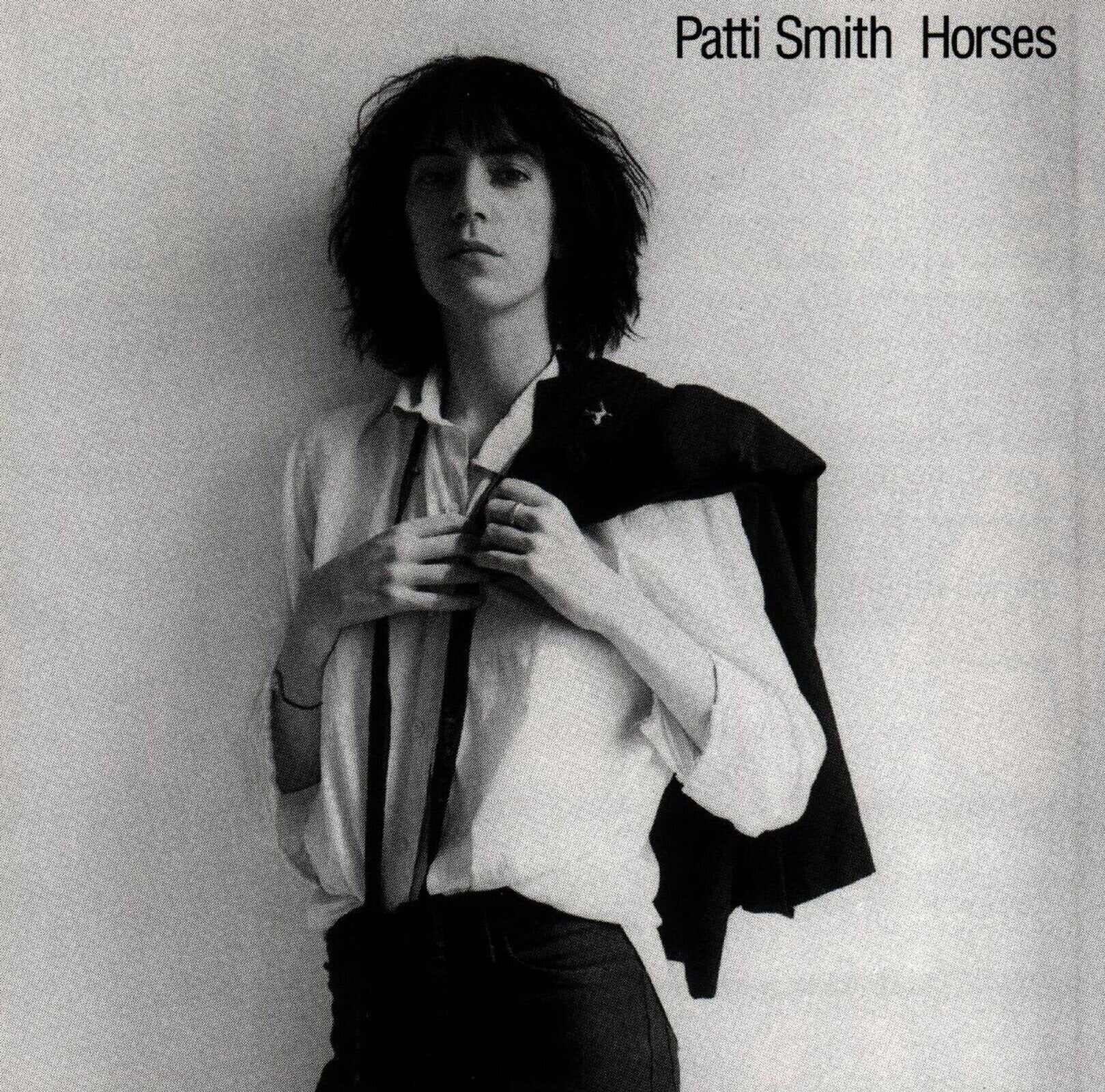
8. Patti Smith – Horses (1975)
Patti Smith arrived as a poet, not as a singer, and that is exactly why her debut turned into something that had not existed before. Horses came out on 10 November 1975 on Arista Records, was recorded in September of that year at Electric Lady Studios and produced by John Cale of the Velvet Underground. Nothing was polished. Everything served the words.
The album opens with a reworked Gloria by Van Morrison, which Smith took apart and rebuilt around her own poetry. The nine minute Land is built on the old hit Land of a Thousand Dances and turns into a stream of consciousness nobody had put on a rock record before. The band behind her plays simply, almost garage style, and that contrast with the words is exactly what made Horses a template for everything that followed.
Fun fact: the black and white portrait on the sleeve was taken by Robert Mapplethorpe, at the time an unknown photographer and her closest friend, with whom she had lived for years. White shirt, jacket over the shoulder, no make-up. Dozens of people have copied that cover since.
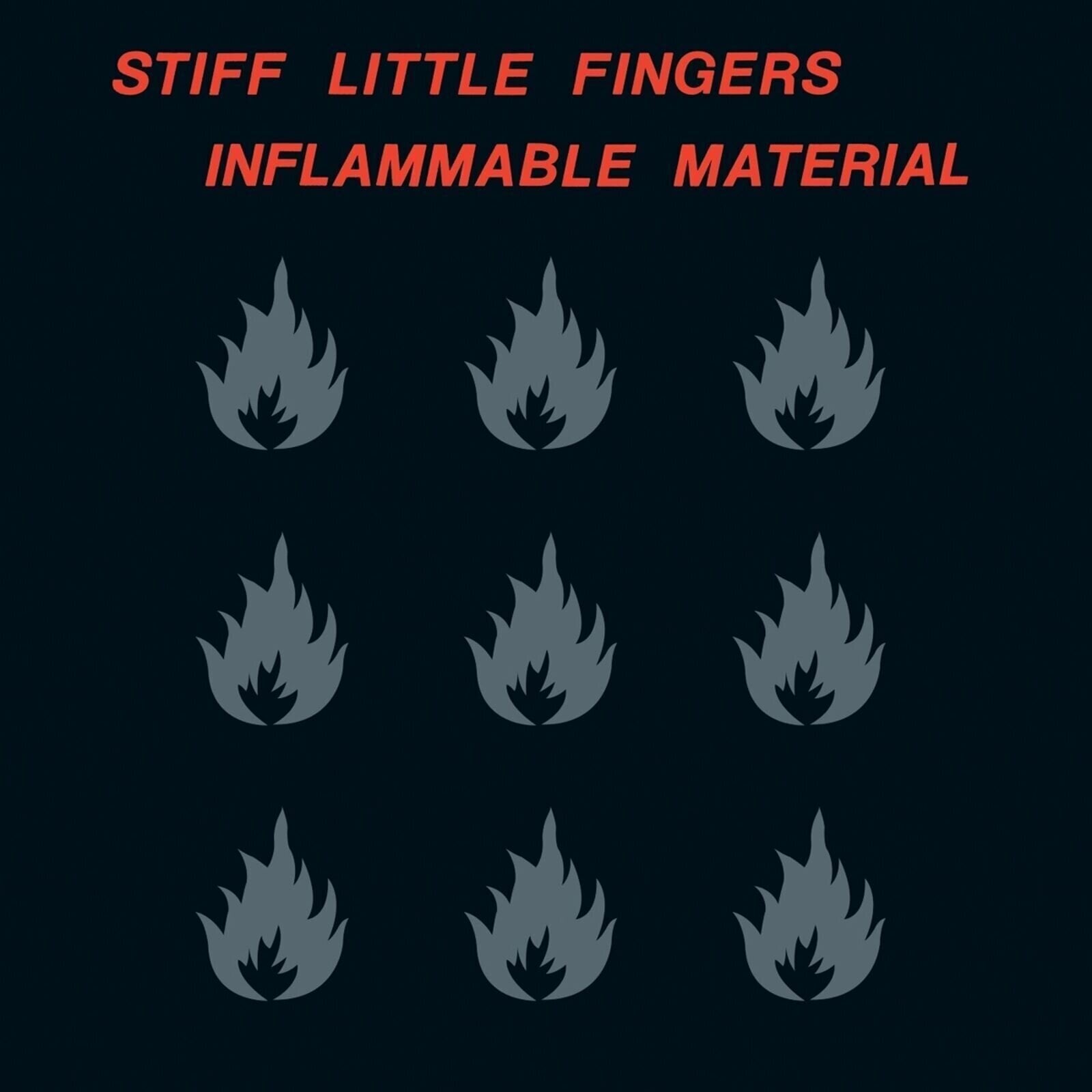
7. Stiff Little Fingers – Inflammable Material (1979)
While London was busy with television scandals, in Belfast punk was played in a city full of patrols and checkpoints. Stiff Little Fingers recorded their debut in 1979 and it became the very first album released by Rough Trade. It climbed to number 14 in the British chart, which was unheard of for a band with no major label behind them.
The voice of Jake Burns sounds like a throat that gave up on shouting a long time ago. He wrote the lyrics with journalist Gordon Ogilvie, who also managed the band. Suspect Device is about what happens to a person who is told long enough which side they belong to. Alternative Ulster came out as a single in October 1978 and became the anthem of a generation that wanted neither of the sides on offer. This is not punk about suburban boredom, it is punk from a city where people were being shot at.
Fun fact: the band's name is not their own idea. They took it from the song Stiff Little Fingers off Pure Mania, the 1977 album by London band The Vibrators.
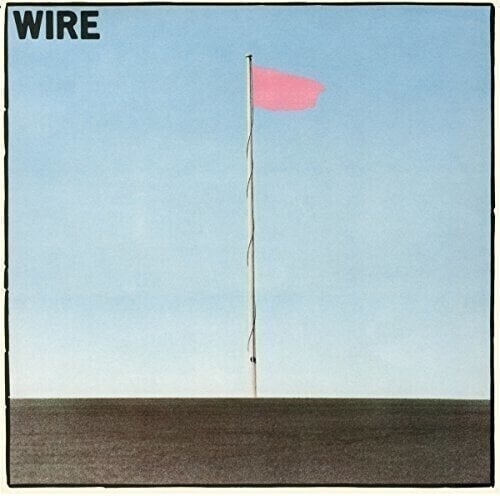
6. Wire – Pink Flag (1977)
Wire were four art students who looked at punk as material, not as a lifestyle. Pink Flag came out on 25 November 1977 on Harvest, was recorded in September and October at Advision Studios and produced by Mike Thorne. There are twenty one songs on it and the whole record runs 35 minutes and 26 seconds.
The principle was simple and uncompromising. If one riff was enough, no second one was added, and if a chorus did not need repeating, the band simply stopped playing. Field Day for Sundays runs twenty eight seconds. Other songs end after forty five. Next to them stand Ex Lion Tamer and the title track Pink Flag, normal in length and all the bigger in reach. Post-punk and American hardcore both grew out of this record, and if you play it on decent headphones you hear how carefully it is built.
Fun fact: the song 12XU from this album was taken up by Minor Threat and their version came out in 1982 on the Flex Your Head compilation. One of the first bridges between British punk and Washington hardcore.
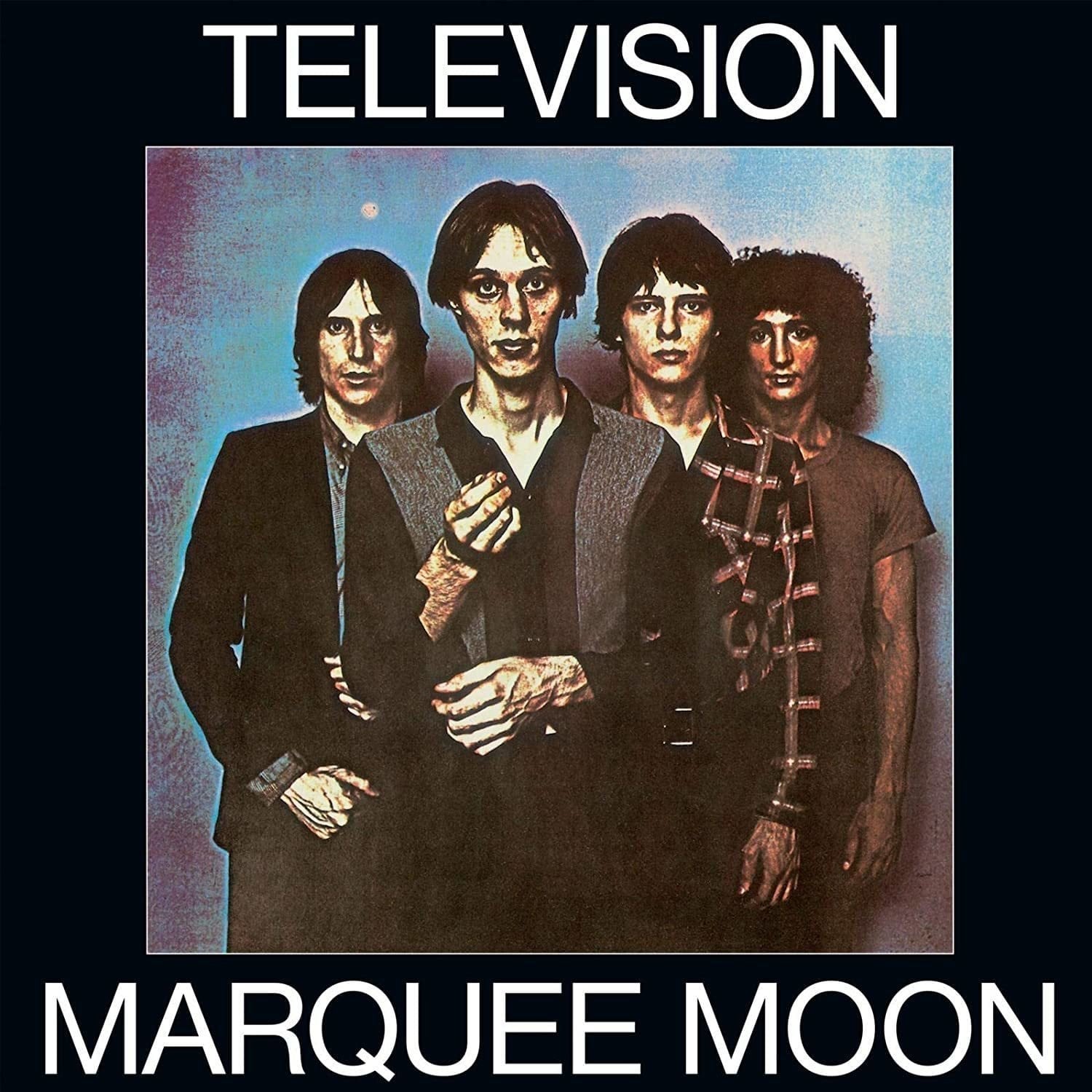
5. Television – Marquee Moon (1977)
Television were the first band Hilly Kristal let play at CBGB. They started their Sunday residency there on 31 March 1974 and built the stage with their own hands. Three years later, on 8 February 1977, they released a debut on Elektra that shared the energy of the rest of the scene but not its approach to the guitar.
Marquee Moon is above all a record about two guitars. Tom Verlaine and Richard Lloyd do not play chords against each other, they play around each other. One leads a line, the other comments on it, and in the ten minute title track it builds into a solo that has nothing to do with blues cliché. Verlaine produced the album with engineer Andy Johns, who had previously worked with the Rolling Stones. Venus and Friction prove they could do it in three minutes too.
Fun fact: the band's original bass player was Richard Hell. He left before the recording, formed The Heartbreakers with ex-members of the New York Dolls and then the Voidoids. On Marquee Moon the bass is played by Fred Smith, who had previously been in Blondie.
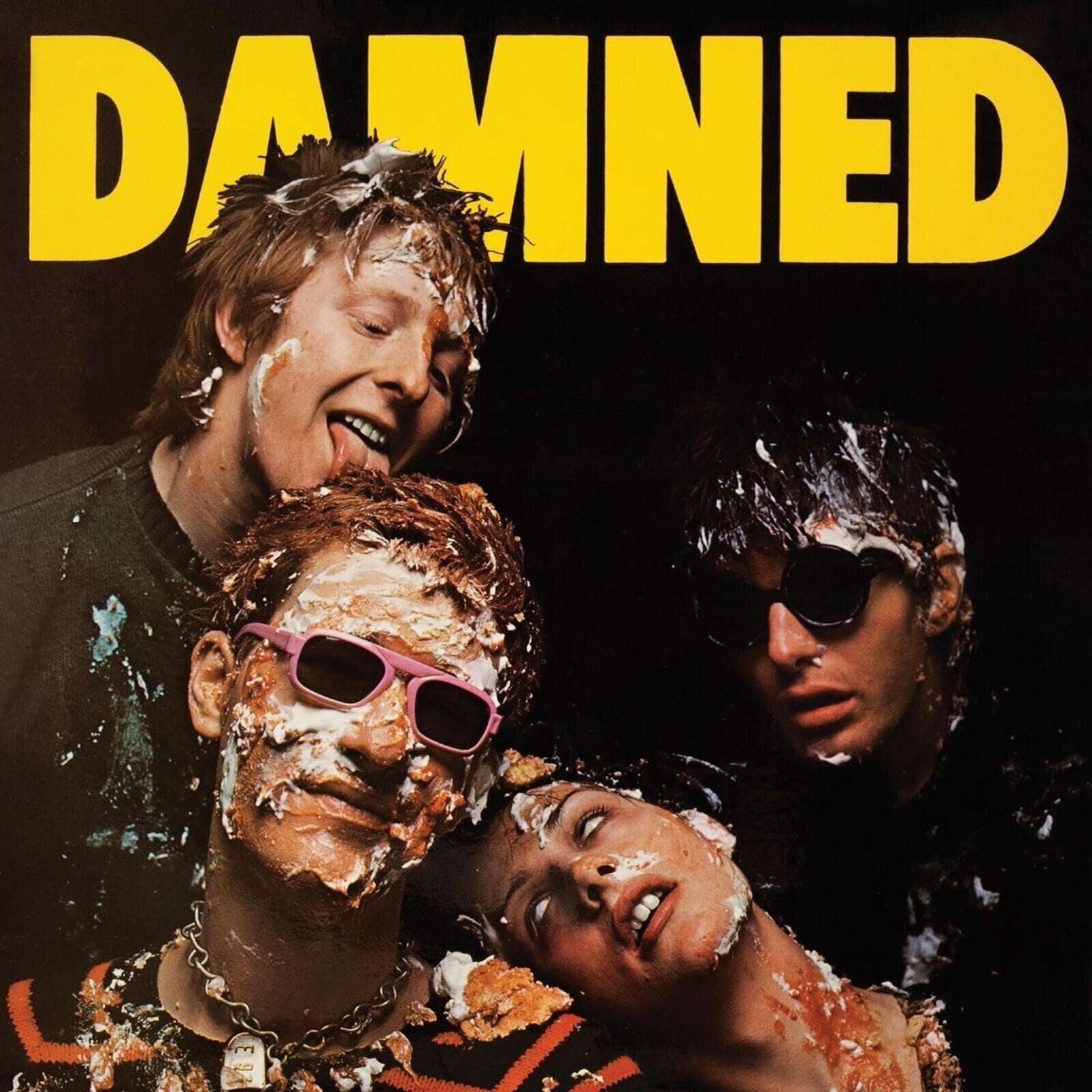
4. The Damned – Damned Damned Damned (1977)
The Sex Pistols had the scandals, The Damned had the head start. Their single New Rose came out on 22 October 1976 and was the very first single by a British punk band. The album Damned Damned Damned followed on 18 February 1977 on Stiff Records and became the first album released by a British punk band. It reached number 34 in the chart.
It was recorded at Pathway Studios with producer Nick Lowe and sounds exactly the way bands played live in 1977. Fast, dirty, no fixing. Neat Neat Neat is driven by its bass line, Dave Vanian sings like he has just come back from a funeral, and drummer Rat Scabies hits the kit as if he wanted to break it. For bands starting out at the time it was proof that you can do it without a major label behind you.
Fun fact: The Damned were also the first British punk band to tour America. They played their first two sets on 7 April 1977, at CBGB of all places.
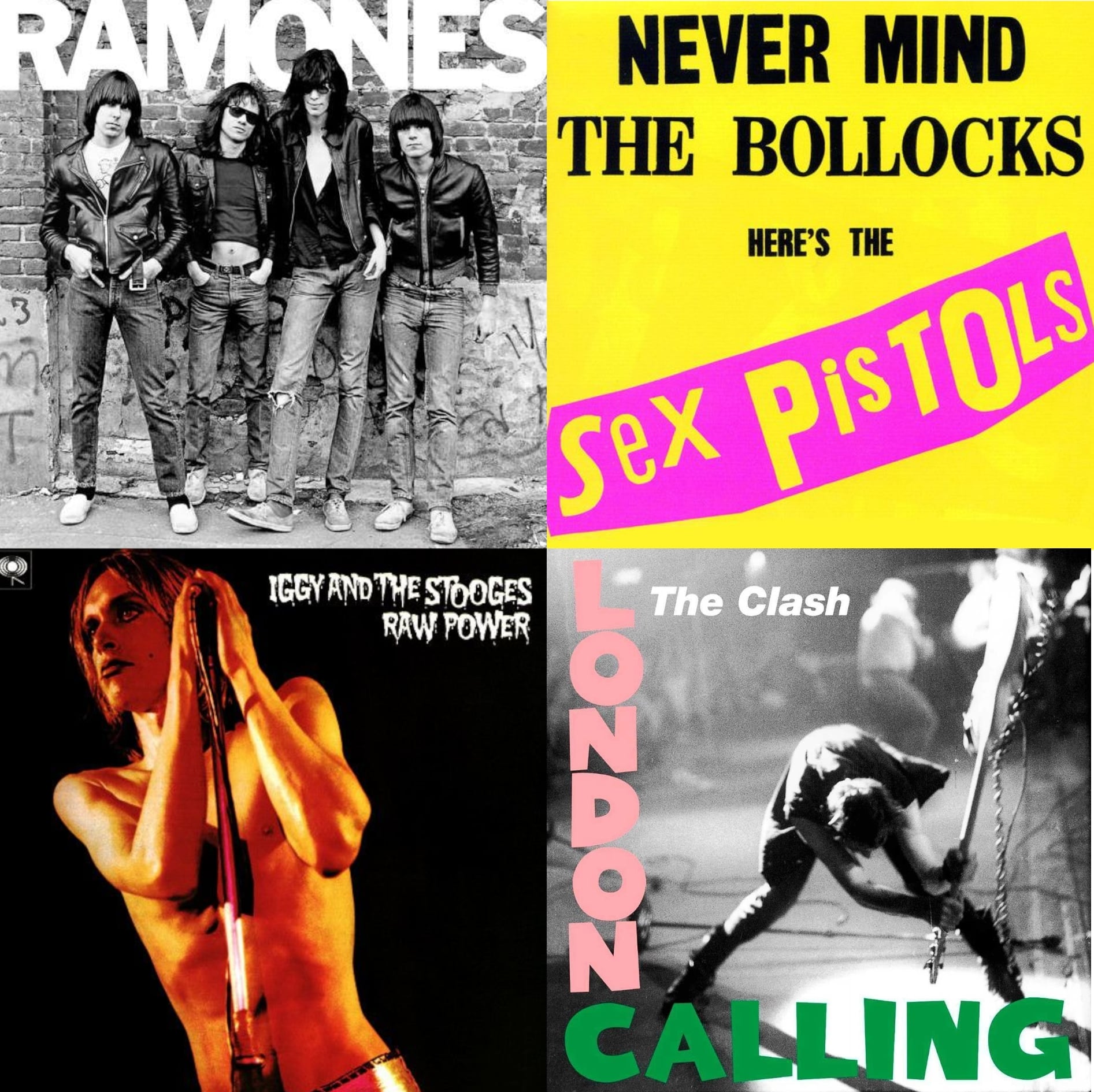
3. Ramones – Ramones (1976)
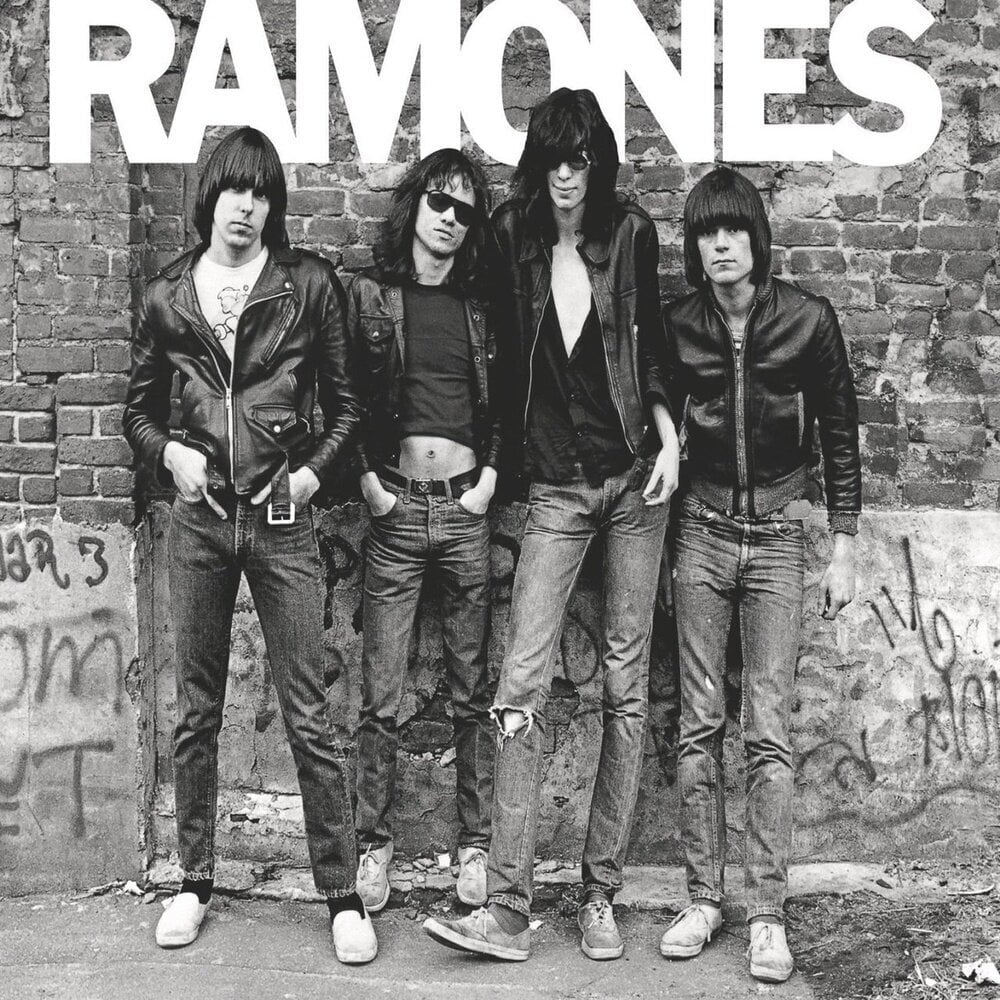
This is the record where punk turned from an idea into a form. The Ramones released their debut on 23 April 1976 on Sire Records and recorded it in seven days, three of them for the instruments and four for the vocals. The whole thing cost 6,400 dollars. Producer Craig Leon later said that making an album in a week for that money was unthinkable at the time.
Fourteen songs, under half an hour, not a single solo. Blitzkrieg Bop, Beat on the Brat, Judy Is a Punk and Now I Wanna Sniff Some Glue are built on barre chords that Johnny Ramone hammers in pure downstrokes, on Dee Dee's bass and on a tempo that never drops. This is the record that convinced hundreds of people that a band needs a guitar, a bass, a drum kit and the will to do it. When the Ramones played London in the summer of 1976, the audience included people who recorded other albums from this list a few months later.
Fun fact: the iconic shot of the four of them against a brick wall was taken by Roberta Bayley for Punk magazine and she was paid 125 dollars for it. The label hired a well known photographer for the sleeve, but the band did not like his polished shots and pushed Bayley's picture through instead.
2. Sex Pistols – Never Mind the Bollocks, Here's the Sex Pistols (1977)
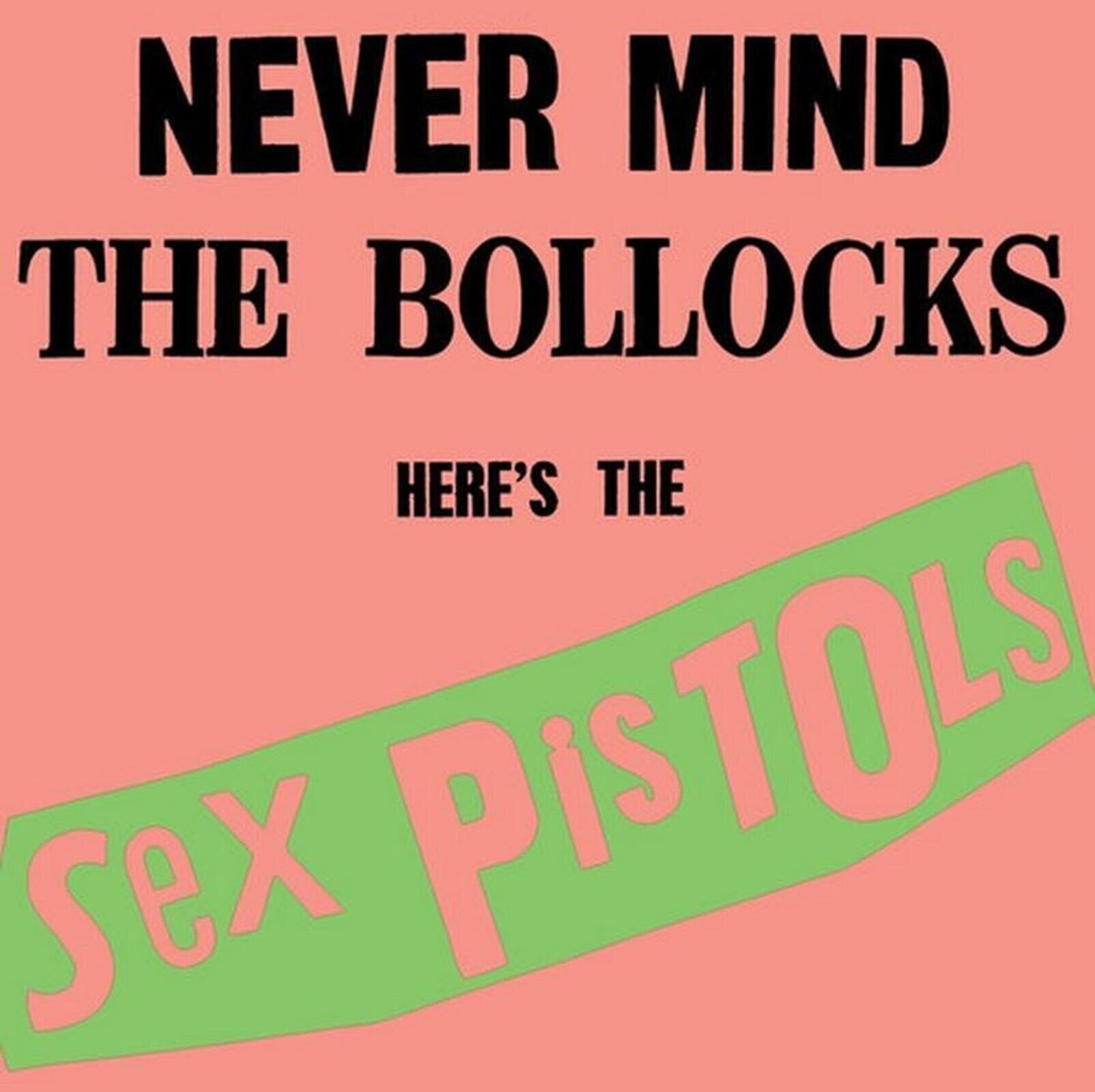
The only studio album by the Sex Pistols came out on 28 October 1977 on Virgin Records. Radio refused to play it, part of the shops refused to display it, and it still went straight to number one in the British chart. It is rare for a single record to change the whole music industry in one year. This one did.
Anarchy in the U.K., God Save the Queen, Pretty Vacant and Holidays in the Sun sound harder than punk is usually described. The guitars of Steve Jones are layered and massive, so the album is closer to hard rock than to three chords in a garage. Over them Johnny Rotten does not build melodies, he attacks. The yellow and pink sleeve with letters cut out of newspapers was designed by Jamie Reid and became one of the most copied visuals in music history. You will find it on music merch too.
Fun fact: one word in the title took the album to court. Chris Seale, the manager of the Virgin shop in Nottingham, was arrested on 5 November 1977 for displaying a poster with the album title and charged under the Indecent Advertisements Act of 1889. The defence was taken by barrister John Mortimer, who explained in court that bollocks is an old English word for nonsense. On 24 November 1977 the court acquitted the shop manager.
1. The Clash – London Calling (1979)
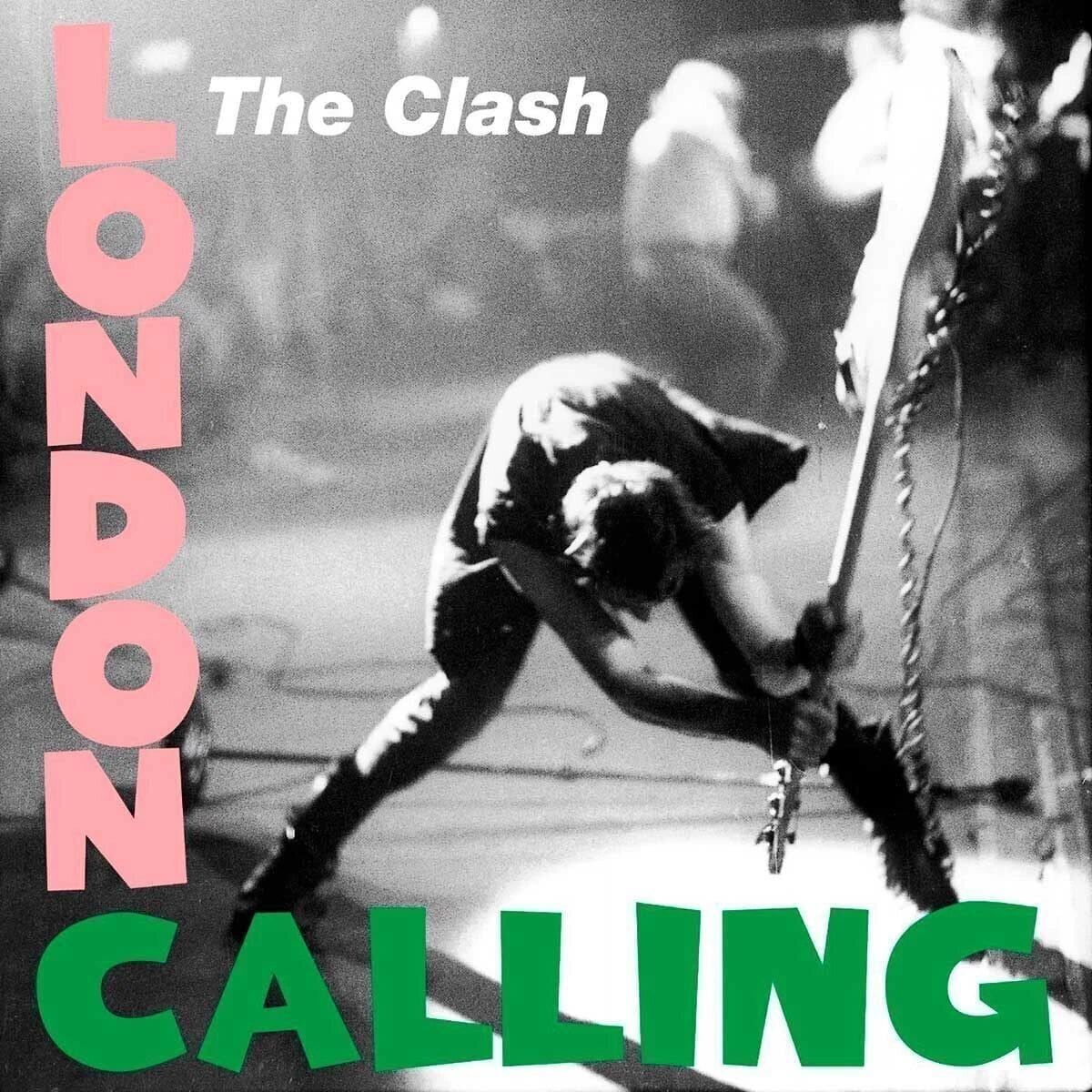
Punk was supposed to last two years and be done. Instead The Clash recorded a double album that came out on 14 December 1979 on CBS and showed that the genre stretches as far as you want it to. They recorded it from August 1979 at Wessex Studios over about five to six weeks with producer Guy Stevens.
Across nineteen songs you get punk, ska, reggae, rockabilly and soul, and none of it feels like a trip away from home. The title track London Calling is an anthem about a city waiting for disaster. The Guns of Brixton was written and sung by bass player Paul Simonon about the neighbourhood he grew up in, and its bass line is one of the most quoted in British rock. Rudie Can't Fail, Spanish Bombs and Death or Glory show a band that no longer has to prove anything to anyone. If you buy a single record from this list for your turntable, make it this one.
Fun fact: the cover photo was taken by Pennie Smith on 21 September 1979 at The Palladium in New York. It shows Paul Simonon smashing his Fender Precision bass against the stage. Smith thought the shot was out of focus and unusable, Joe Strummer and artist Ray Lowry saw the exact opposite in it. Lowry added the pink lettering down the left side and the green one along the bottom, exactly like the sleeve of Elvis Presley's 1956 debut.
Punk did not end, it just moved house
Seventies punk did not last long and part of its power was exactly that. By 1980 the scene had moved on. In America it grew into hardcore with bands like Dead Kennedys and Misfits, in Britain part of the musicians turned to post-punk and to darker things like Joy Division were doing.
The echo never stopped, though. Without these ten records there would be no Nirvana, no Green Day and not much of what comes out of garage rehearsal rooms today. And above all, punk was never about gear. All you need is a guitar, an amp, a few picks and the urge to play it loud. The rest is just volume.
If you enjoy lists like this one, take a look at the albums that defined British heavy metal, grunge, nu metal, eighties synth-pop and boom bap as well.
Photo sources: Shutterstock, Wikipedia, Discogs