 Albania
 Argentina
 Australia
 Austria
 Belgium
 Bosnia and Herzegovina
 Brazil
 Bulgaria
 Canada
 Chile
Chile
 Colombia
 Croatia
 Czech Republic
 Denmark
 Estonia
 Finland
 France
 Germany
 Greece
 Hungary
 Ireland
 Italy
Italy
 Latvia
 Lithuania
 Luxembourg
 Mexico
 Moldova
 Montenegro
 Netherlands
 New Zealand
 North Macedonia
 Norway
 Philippines
 Poland
 Portugal
 Romania
 Serbia
 Slovakia
 Slovenia
 South Africa
 Spain
Spain
 Sweden
 Switzerland
 Turkey
 Ukraine
 United Kingdom
 United States of America



How to learn to play the violin
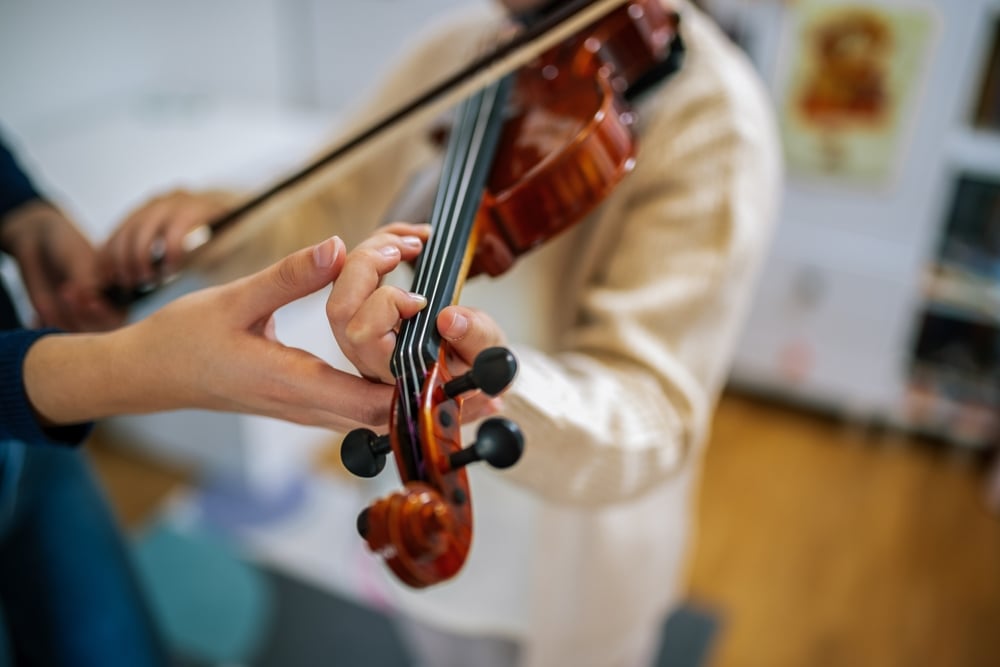
Can you learn the violin on your own?
What do you need to start?
You need surprisingly little to get going. Most beginner sets already include the bow and rosin.
Equipment | What it is for |
|---|---|
Violin with bow | basic, ideally a beginner set |
Rosin | to coat the bow so it sounds |
Chin rest and shoulder rest | comfortable, stable hold |
Tuner | clean tuning of G, D, A, E |
Spare violin strings | the thinnest one snaps sometimes |
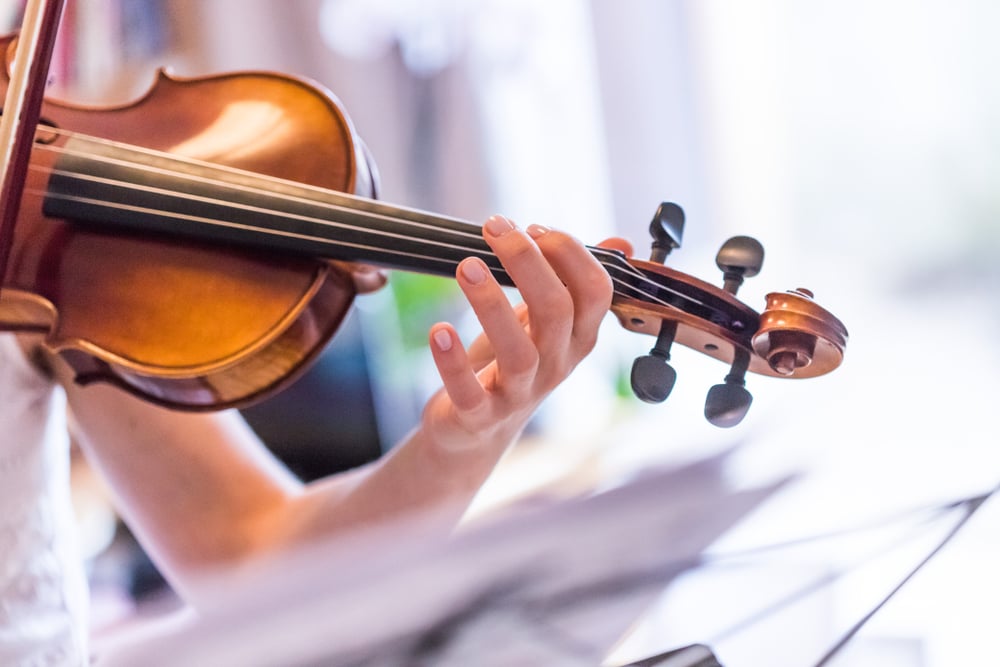
How to choose the right violin size?
Violins come in several sizes and are chosen by arm length, not by age. A child should have a violin they can comfortably reach around to the scroll with an outstretched left arm.
Violin size | Approx. age | Arm length |
|---|---|---|
1/16 | 3–5 years | up to ~43 cm |
1/8 | 4–6 years | ~43–46 cm |
1/4 | 5–7 years | ~47–51 cm |
1/2 | 7–9 years | ~52–56 cm |
3/4 | 9–11 years | ~57–60 cm |
4/4 (full) | 11+ and adults | 60+ cm |
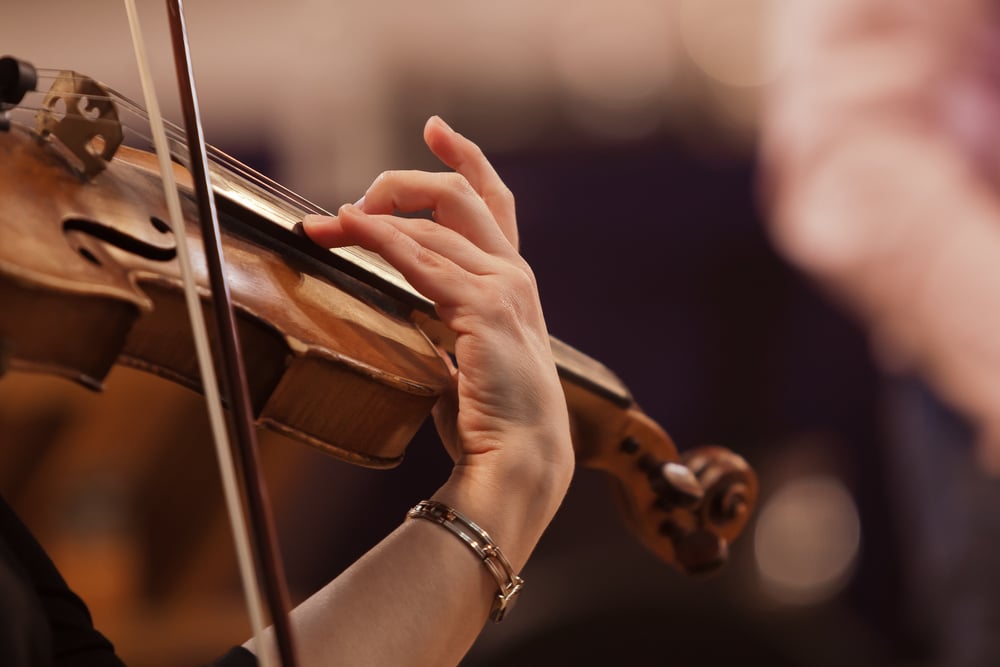
First steps: holding the violin and bow
Start with the stance. Rest the violin on your left shoulder and hold it with your chin; the left hand only lightly supports the neck. Hold the bow relaxed, thumb slightly bent, fingers resting naturally. At the very start, practise drawing the bow across the open strings to get a clean, even tone without scratching. Only then add the left-hand fingers. Patience pays off here more than speed.
How long until you play your first song?
With regular practice you will play a simple melody from open strings and the first fingers within a few weeks. A clean, pleasant tone without scratching is a longer run and is measured more in months. The key is short but daily practice. Even fifteen minutes a day moves you forward more than an hour once a week.
Frequently asked questions about playing the violin
Is the violin hard to learn?
They are among the more demanding instruments, mainly due to the missing frets and the bowing. The first weeks are about patience, but with regular practice progress comes.
Do I need a teacher for the violin?
It is not a must, but with the violin it helps a lot. At least a few lessons at the start will set up your hold and intonation. After that you can carry on by yourself.
What size violin for a child?
By arm length, not age. Small children start on size 1/16 or 1/8, schoolkids on 1/2 or 3/4. The size table above will help.
How do you tune a violin?
The violin has four strings: G, D, A, E. Tune them with a tuner, using the pegs for gentle turns and the fine tuners on the tailpiece for small adjustments. You will not manage without a tuner at the start.
At what age can a child start the violin?
As early as around 5 to 6 years, thanks to small sizes like 1/16 or 1/8. The important thing is to pick the violin by arm length, not by age.