 Albania
 Argentina
 Australia
 Austria
 Belgium
 Bosnia and Herzegovina
 Brazil
 Bulgaria
 Canada
 Chile
Chile
 Colombia
 Croatia
 Czech Republic
 Denmark
 Estonia
 Finland
 France
 Germany
 Greece
 Hungary
 Ireland
 Italy
Italy
 Latvia
 Lithuania
 Luxembourg
 Mexico
 Moldova
 Montenegro
 Netherlands
 New Zealand
 North Macedonia
 Norway
 Philippines
 Poland
 Portugal
 Romania
 Serbia
 Slovakia
 Slovenia
 South Africa
 Spain
Spain
 Sweden
 Switzerland
 Turkey
 Ukraine
 United Kingdom
 United States of America







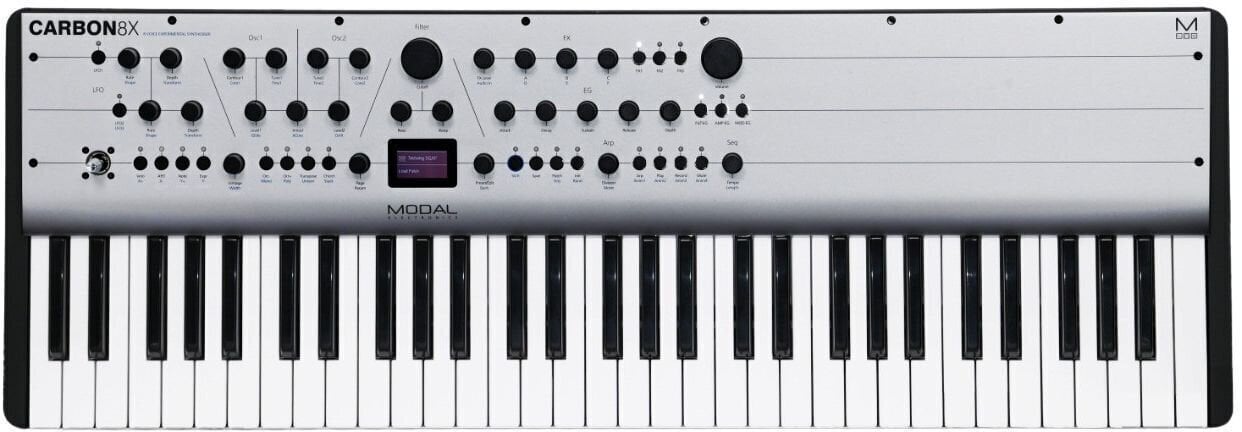
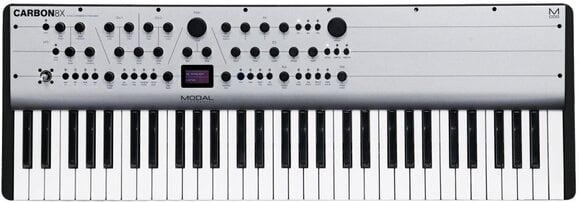
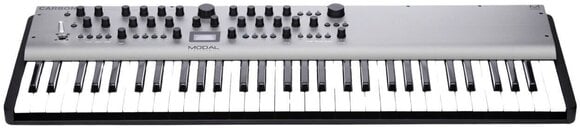
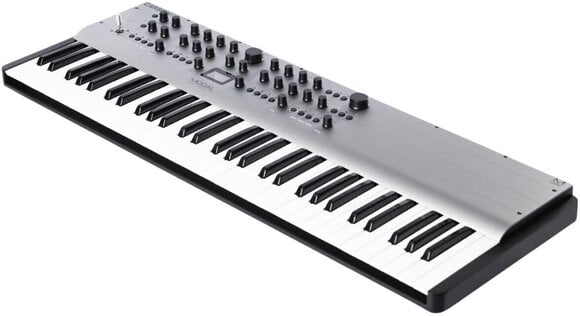
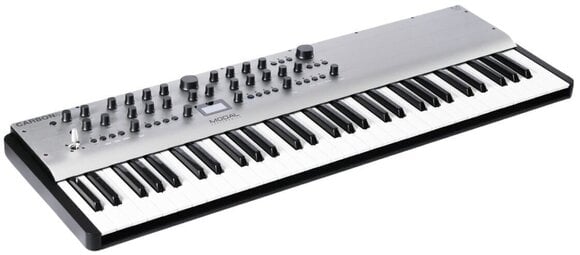


- Тype: Keyboard Synthesizer
- Sound Engine: Digital
- Number of Keys: 61
- Polyphony: 8
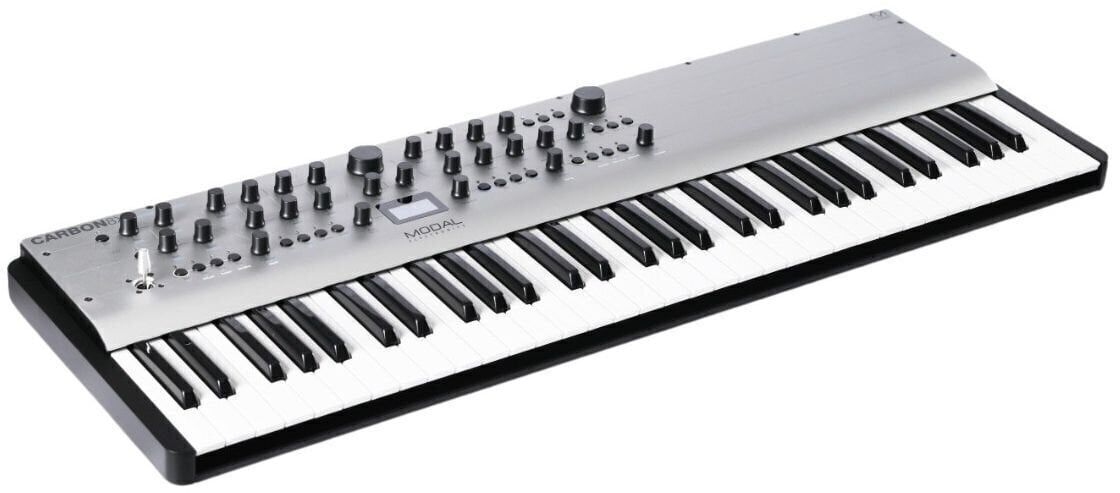
Modal Electronics Carbon 8X Synthesizer Grey
Carbon 8X is an 8-voice experimental synthesizer with a 61-key FATAR TP9/S keybed featuring aftertouch, built to push the boundaries of digital sound creation and live performance. Its engine draws on two independent oscillators, each offering 56 complex Digital Core waveforms — spanning 18 digital algorithms and 38 sophisticated wavetables — combined with 34 resonant filter types ranging from morphable to static configurations. Three high-resolution LFOs, three envelope generators and 12 modulation slots deliver deep routing possibilities for dynamic and evolving textures.
Performance and Sequencing
The integrated 512-note real-time/step sequencer and 32-step programmable arpeggiator transform Carbon 8X into a self-contained performance instrument. Full MPE support enables expressive play with compatible controllers, while four animation lanes add motion and variation to sequences over time.
Studio-Quality Effects
A three-slot FX engine with 100 user-configurable effect slots covers an extensive palette: Drive, Chorus, Phaser, Flanger, Tremolo, LoFi, Rotary, Stereo Delay, Ping-Pong Delay, X-Over Delay and Reverb. Dual mono line outputs, a headphone output and a stereo audio input round out the signal chain alongside USB and MIDI connectivity.
Build and Integration
Housed in a road-ready steel and aluminium chassis measuring 885 × 300 × 100 mm and weighing 9 kg, Carbon 8X stores up to 500 patches. MODALapp integration provides in-depth software editing and patch management from any connected device.
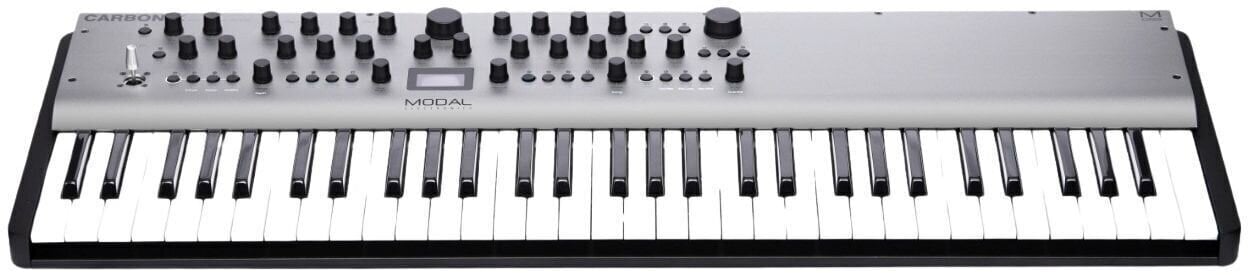
Number of Keys: 61
This instrument has 61 keys, equivalent to 5 octaves, providing a wide range of tones for a variety of musical applications.
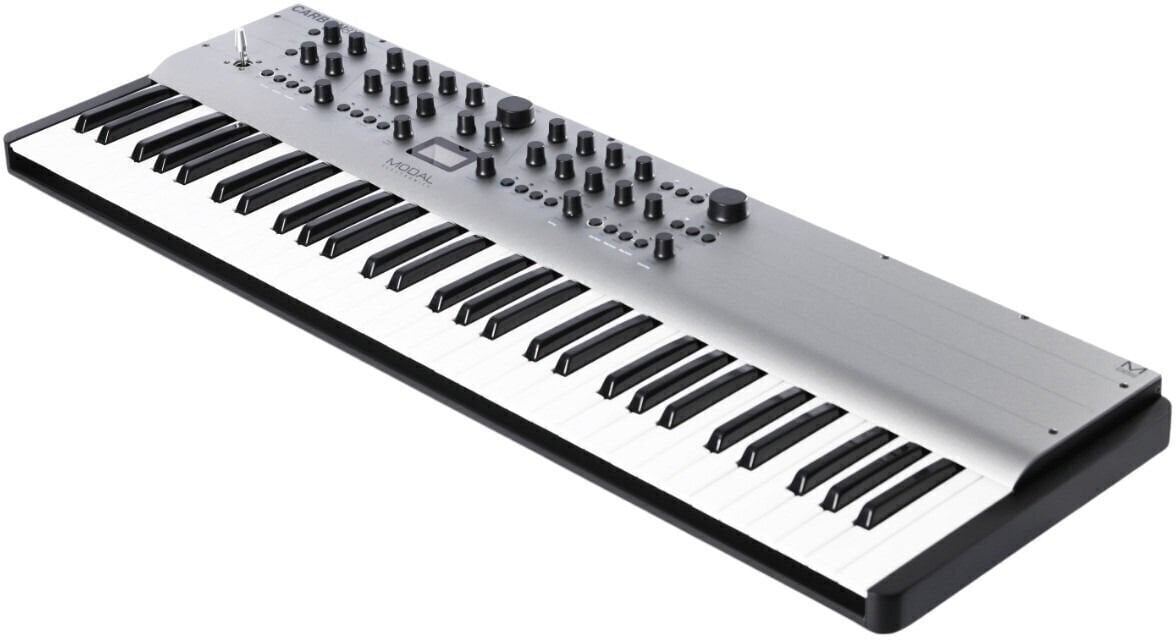
Aftertouch: Yes
Aftertouch technology on the keys allows musicians to add a new level of expression to their playing. When a key reaches the bottom of its stroke, the pressure exerted on the key can continue to be sensed and used to control various aspects of the sound, such as vibrato, volume, or tone modulation.
Polyphony: 8
The polyphony of this instrument allows up to <%=tp_value % notes to be played simultaneously, providing rich and complex musical possibilities.

LFO: Yes
An LFO, or low frequency oscillator, brings electronic sound to life. It adds movement and interest to synthetic sounds and effects, playing an important role in both subtle synthesis and bold sound design. However, you won't hear the LFO itself because it acts as a modulator. This means that it does not directly affect the audio signal, but adjusts other parameters such as oscillator pitch and filter clipping.
Envelope: ADSR
The ADSR (Attack, Decay, Sustain, Release) type envelope filter gives you precise control over the dynamics and shape of your sound. The ADSR components are detailed as follows: Attack: Specifies how quickly the sound reaches its maximum volume upon activation. Decay: Specifies the time it takes for the volume to drop from maximum to sustain. Sustain: Represents a stable volume level that is maintained as long as the sound is active. Release: Specifies how quickly the volume fades to zero after the sound has been released.
Oscillators: Yes
A powerful oscillator system allows users to create rich and variable sound textures. Oscillators can generate a variety of waveforms, including sine, square, triangle, and noise, allowing for creativity and experimentation.
Sequencer: Yes
The sequencer provides musicians with a tool for composing and arranging music, allowing them to create and edit musical sequences. This feature allows you to record and play back repeating patterns. This makes it easy to create complex rhythms and melodies. The sequencer also allows you to layer different musical elements on top of each other, sync with other devices, and adjust parameters in real time. This flexibility makes the sequencer an invaluable tool for producing music, experimenting with new sounds and creating original compositions.
Arpeggiator: Yes
The Arpeggiator transforms chords into sequences of individual notes played in various rhythmic and melodic patterns. Instead of playing the chords as a harmonic whole, the Arpeggiator breaks the chords into individual notes and plays them sequentially according to the selected algorithm.
Headphone Output: Yes
The headphone output allows direct connection of headphones for private listening. This output provides a convenient way to enjoy the sound without disturbing others or ambient noise.
Inputs
- Sustain Pedal
- Expression Pedal
- MIDI IN
- Jack 3,5 mm
Outputs
- Jack 3,5 mm
- MIDI OUT
- Headphone Jack 6,3 mm
- Jack 6,3 mm
Pedal Inputs: Yes
The pedal input allows you to connect an external pedal that expands the instrument's control capabilities and contributes to a richer musical expression, increasing flexibility and expressiveness when playing and creating music.
MIDI Interface: Yes
It supports MIDI, allowing you to connect and communicate with other MIDI-compatible devices. This feature extends control and integration into the larger music environment, increasing flexibility and creativity in music creation.
Package Contents
- Manual
- USB-A to USB-B Cable
- Adapter

Тype
Keyboard Synthesizer
Keyboard Technology
Fatar TP9/S
Aftertouch
LFO
Envelope
ADSR
Oscillators
Modulation
Faders
No
Arpeggiator
Effect Types
Number of Presets
MIDI Interface
Bluetooth
Built-in Speaker
Touch Sensitive
Accompaniment
Arranger
Sound Engine
Number of Keys
Key Size
Standard
Polyphony
Pitch Bend
No
Storage Medium
Display
Display Type
Colour
Original Colour by Producer
Grey
Headphone Output
Pedal Inputs
Analogue Outputs
Microphone Input
USB
USB MIDI
USB to Device
USB to Host
Memory Card Slot
Filter
Yes
Sequencer
Yes
UK/EU Power supply included
Width (cm)
88,5
Height (cm)
10
Depth (cm)
30
Weight
9 kg
Net Weight (kg)
9
Made in
China


Documents
Instructions for use
Safety instructions
Please refer to the user manual for the specific safety instructions for this product.


