 Albania
 Argentina
 Australia
 Austria
 Belgium
 Bosnia and Herzegovina
 Brazil
 Bulgaria
 Canada
 Chile
Chile
 Colombia
 Croatia
 Czech Republic
 Denmark
 Estonia
 Finland
 France
 Germany
 Greece
 Hungary
 Ireland
 Italy
Italy
 Latvia
 Lithuania
 Luxembourg
 Mexico
 Moldova
 Montenegro
 Netherlands
 New Zealand
 North Macedonia
 Norway
 Philippines
 Poland
 Portugal
 Romania
 Serbia
 Slovakia
 Slovenia
 South Africa
 Spain
Spain
 Sweden
 Switzerland
 Turkey
 Ukraine
 United Kingdom
 United States of America







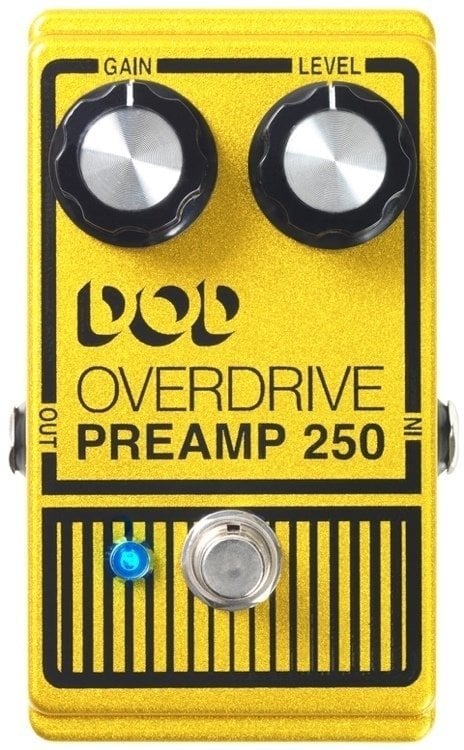
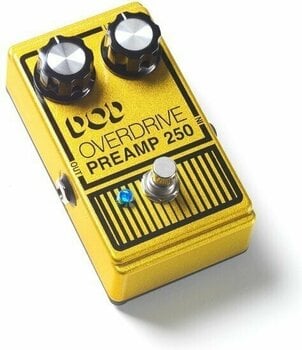
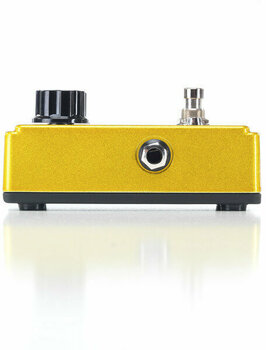
- Тype: Boost, Distortion, Overdrive
- True Bypass: Yes
- Battery Operation: Yes
- MIDI Interface: No
- Controls: Gain, Level
- Power Supply: 9V DC ( - ), Adapter or Battery
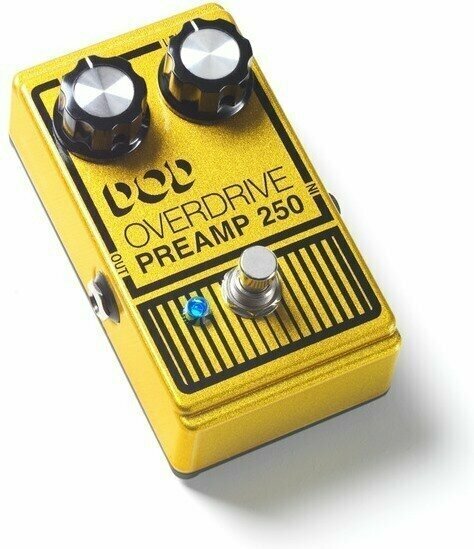
DOD 250 Overdrive True Bypass Preamp Pedal Guitar Effect
The DOD 250 Overdrive True Bypass Preamp Pedal revives a 1970s circuit originally designed by David Oreste Defrancesco to deliver distortion and clean boost without the drawbacks of vintage fuzzes. Built around a vintage-correct LM741 op-amp and silicon clipping diodes, it covers everything from subtle grit to all-out grind via two-knob simplicity. True-bypass switching keeps the dry signal pristine when the effect is not in use.
- Vintage-correct LM741 op-amp and silicon clipping diodes reproduce the original 1970s voicing
- Two-knob layout (Gain, Level) runs from subtle always-on boost to saturated lead tones
- True-bypass switching preserves dry tone when the pedal is disengaged
- Lightweight aluminum chassis with 9V battery or standard 9V DC power supply input
DOD 250 Overdrive Preamp — Vintage 1970s Circuit Reborn
The DOD 250 Overdrive True Bypass Preamp Pedal is a modern reissue of the analog overdrive conceived by David Oreste Defrancesco in the 1970s. Built to deliver distortion and clean boost without the era's fuzz downsides, the pedal returns with vintage-correct components. The current production uses the same LM741 op-amp as the original, paired with silicon clipping diodes for harder-edged breakup than germanium designs. This reissue gives players a two-knob analog drive covering subtle grit, clean boost, and saturated lead tones.
What Sets the DOD 250 Apart
Where most modern overdrives stack tone controls and multiple clipping modes, the 250 keeps the signal path minimal: two knobs, one switch, one op-amp, two clipping diodes. That simplicity is the entire point — the original was designed to push already-working amps into saturation. High input impedance keeps single-coils articulate and humbuckers tight, while true-bypass switching solves the tone-suck that plagued the original's buffered bypass.
Controls and Signal Flow
Two knobs give direct access to the pedal's full tonal range.
- Gain: rotary control — sweeps from a touch of grit to full saturated grind
- Level: rotary control — sets output for always-on body or solo boost above a dense mix
- The true-bypass footswitch leaves the dry signal completely untouched when the effect is disengaged.
Inputs, Outputs, and Power
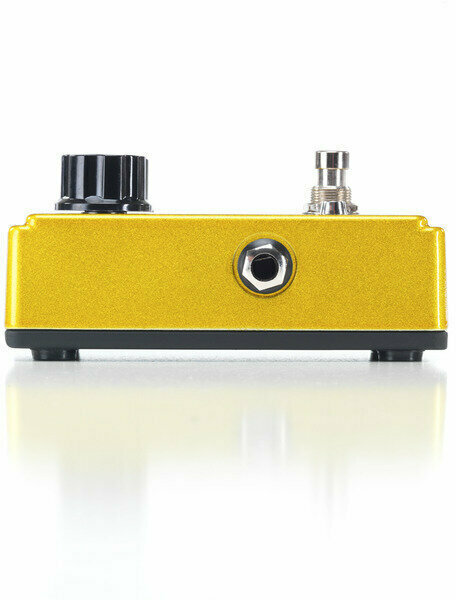
6.35 mm TS connections on both ends make the 250 drop-in compatible with any rig.
- Input: 6.35 mm TS instrument jack
- Output: 6.35 mm TS instrument jack
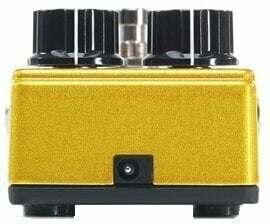
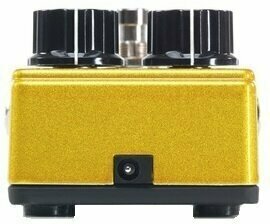
- Power: 9V battery or PS0913DC 9V DC supply — battery compartment or standard barrel jack
Circuit Design and Construction
Character comes from a deliberately simple analog topology and rugged hardware.
- Op-Amp: vintage-correct LM741 — same chip used in the 1970s circuit
- Clipping Diodes: silicon — harder-edged breakup than germanium alternatives
- Chassis: all-metal aluminum — 0.28 kg, 57 × 67 × 119 mm pedalboard footprint
- Status Indicator: crisp blue LED — visible at a glance whether the pedal is active
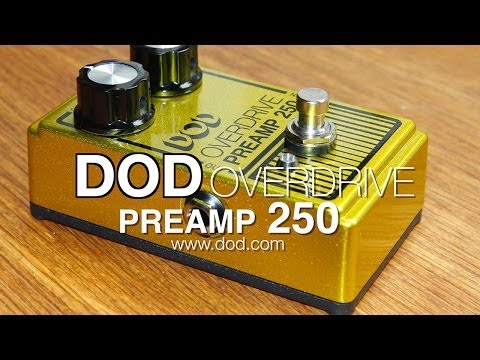
Тype
- Overdrive
- Distortion
- Boost
True Bypass: Yes
It has a true bypass function, which ensures that when the effects are turned off, the signal passes directly through the unit without influence or degradation.
Battery Operation: Yes
Battery power provides flexibility and mobility. This feature allows you to use the device anywhere, even in places where an electrical outlet is not available. Battery power is ideal for situations that require portability and independence from the grid, whether you're outdoors, on the road, or in a location with limited access to electricity.
Inputs: Jack 6,3 mm TS
A universal connector used to connect various audio devices.
Outputs: Jack 6,3 mm TS
A universal connector used to connect various audio devices.
Controls
- Level
- Gain

Тype
Colour
UK/EU Power supply included
Width (mm)
66,8
Height (mm)
57,15
Depth (mm)
118,8
Weight (g)
281


Documents
Instructions for use
Manufacturer information
Safety instructions
Please refer to the user manual for the specific safety instructions for this product.


