 Albania
 Argentina
 Australia
 Austria
 Belgium
 Bosnia and Herzegovina
 Brazil
 Bulgaria
 Canada
 Chile
Chile
 Colombia
 Croatia
 Czech Republic
 Denmark
 Estonia
 Finland
 France
 Germany
 Greece
 Hungary
 Ireland
 Italy
Italy
 Latvia
 Lithuania
 Luxembourg
 Mexico
 Moldova
 Montenegro
 Netherlands
 New Zealand
 North Macedonia
 Norway
 Philippines
 Poland
 Portugal
 Romania
 Serbia
 Slovakia
 Slovenia
 South Africa
 Spain
Spain
 Sweden
 Switzerland
 Turkey
 Ukraine
 United Kingdom
 United States of America









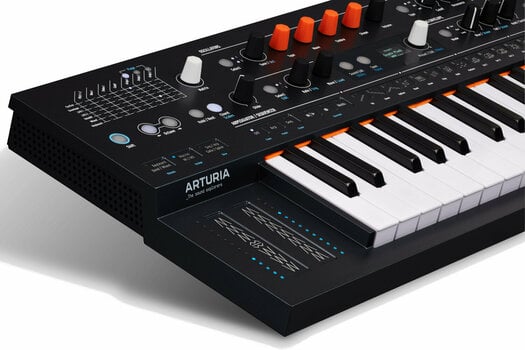
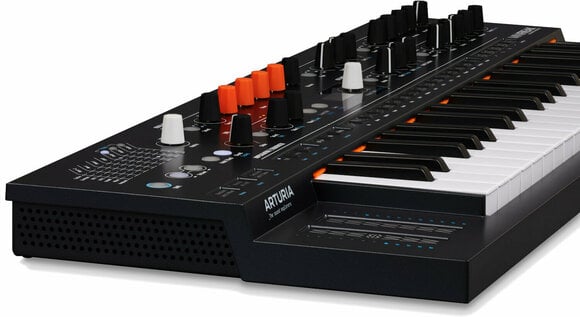
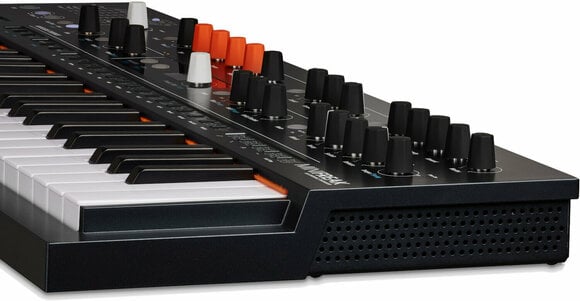

- Тype: Hybrid, Synth
- Sound Engine: Digital
- Number of Keys: 37
- Keyboard Type: Velocity-Sensitive
- Polyphony: 6
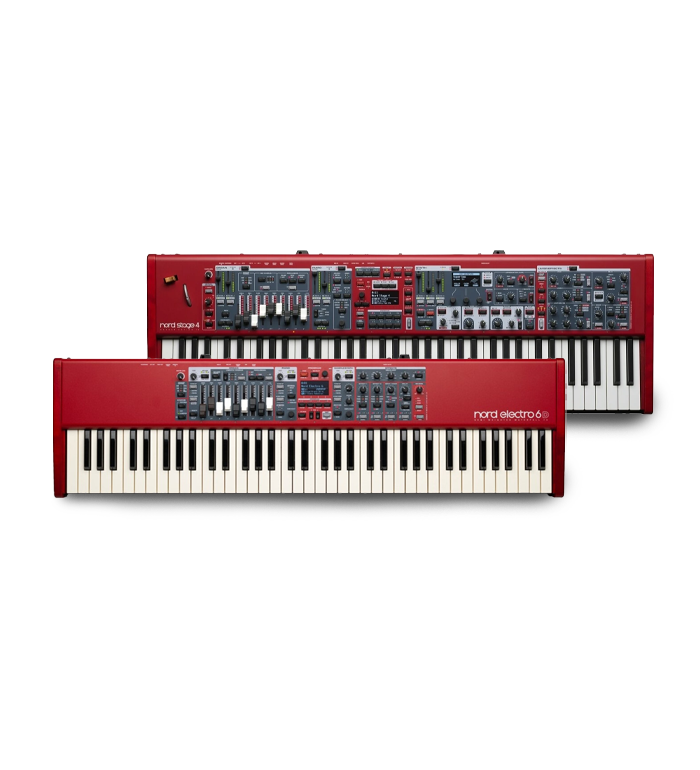
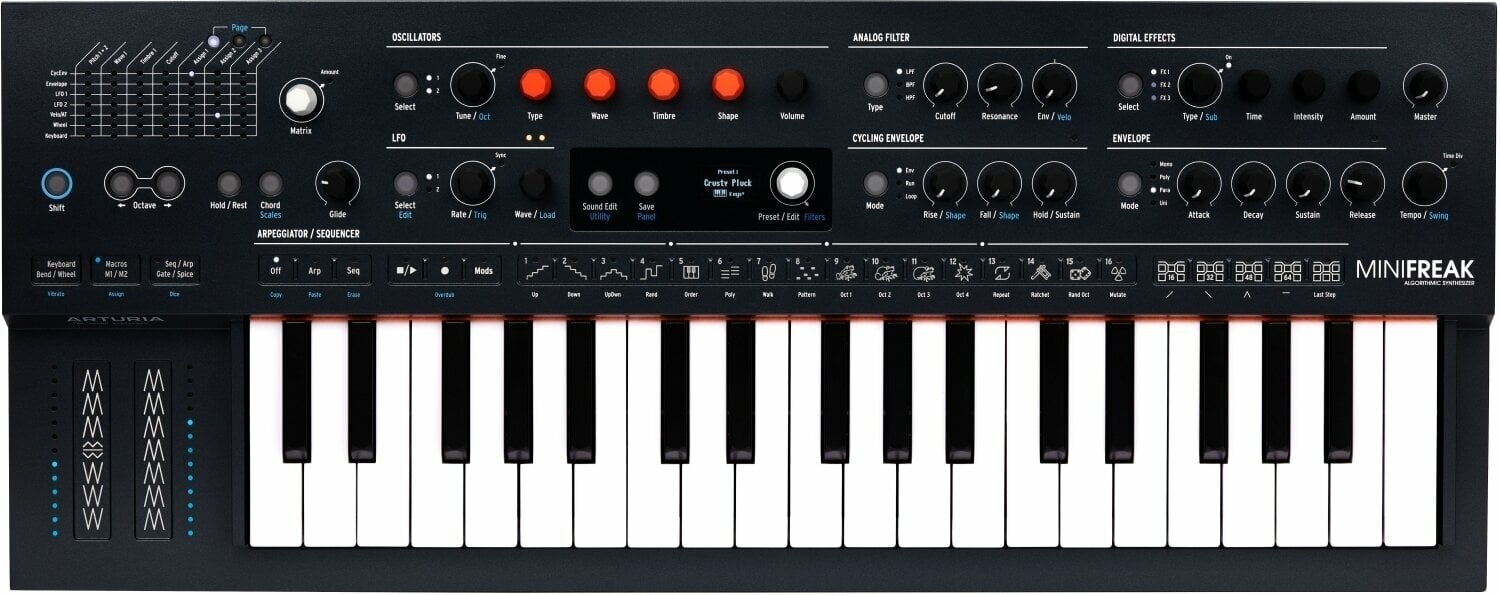
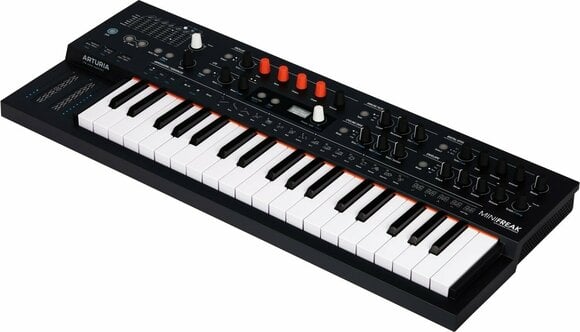
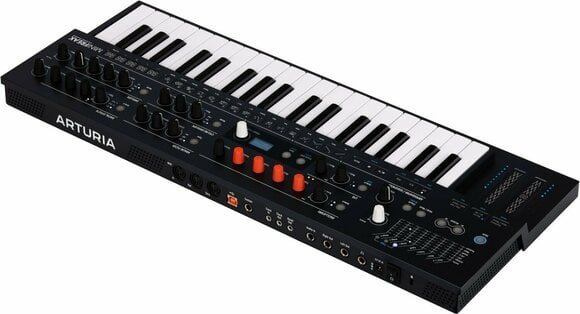
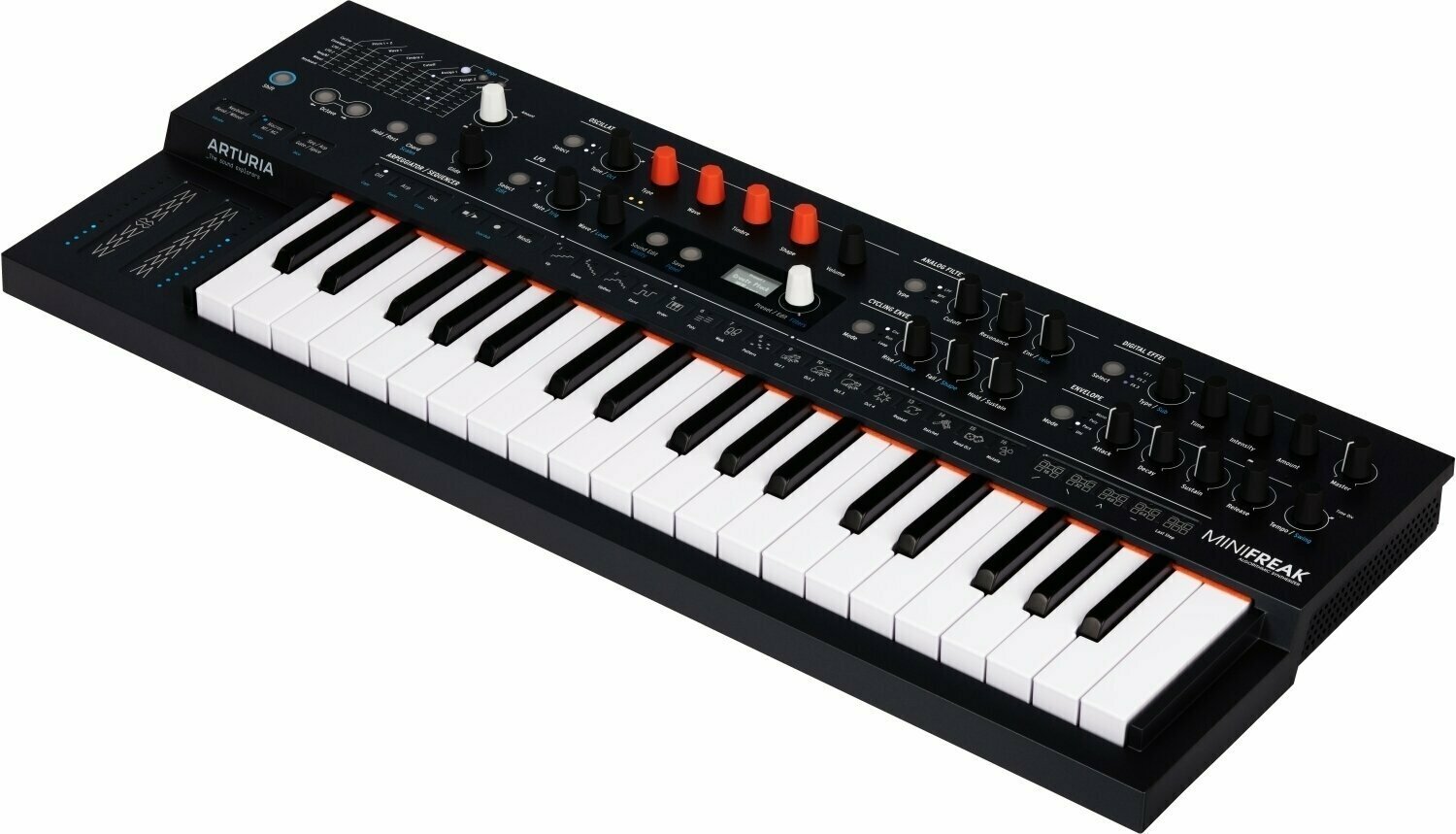
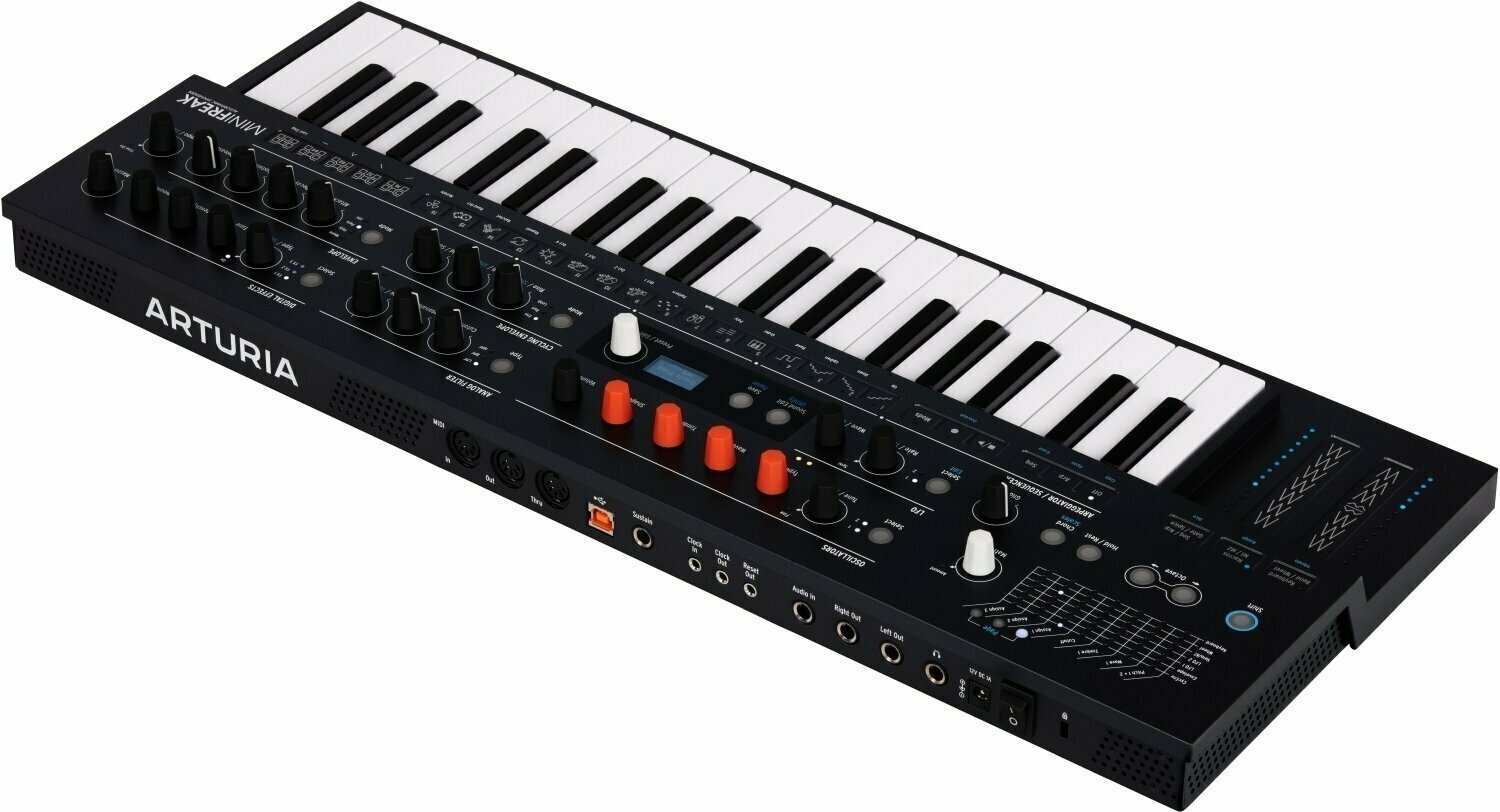
Arturia MiniFreak Synthesizer
The Arturia MiniFreak is a 6-voice polyphonic hybrid synthesizer that blends two digital oscillator engines with true analog filters, spanning from crystalline keys to aggressive bass. With velocity-sensitive keys featuring aftertouch, a powerful modulation matrix, and built-in stereo effects, musicians can craft evolving textures effortlessly. Thanks to the 64-step sequencer and Spice & Dice randomization, this instrument transforms into a generative performance tool for your studio desk or backpack.
- Two digital sound engines with 22 oscillator modes including wavetable, FM, granular, and Karplus-Strong synthesis
- Polyphonic analog state-variable filters can self-oscillate and offer low-pass, band-pass, and high-pass modes
- Players have deep expression with a modulation matrix offering 7 sources and two touch-strip macros
- Take advantage of a 64-step sequencer with 4 modulation lanes, performance arpeggiator, and the included MiniFreak V plugin for seamless DAW integration
Arturia MiniFreak — 6-Voice Polyphonic Hybrid Synthesizer
The Arturia MiniFreak is a 6-voice polyphonic hybrid synthesizer that fuses two digital oscillator engines with true analog filters, covering warm Virtual Analog pads, biting FM leads, and granular textures. Each voice carries its own ADSR envelope, cycling envelope, and twin LFOs, making chords as deep as a modular patch. Hands-on playing is encouraged by a 37-note velocity-sensitive keybed with aftertouch.
Two Engines, 22 Modes, and a Polyphonic Analog Filter
Engine 1 draws on Arturia designs, open-source Mutable Instruments Plaits modes, and three algorithms co-developed with Noise Engineering. Engine 2 can operate independently or process Engine 1 via serial FM/RM, Comb Filter, and Destroy modes. The polyphonic analog filter is a tri-mode state-variable circuit that self-oscillates, lending every patch unmistakable analog bite. MiniFreak V brings the same engine to your DAW.
Keyboard and Polyphony — Expressive Playing Surface
How the instrument responds under your fingers is defined by the keybed and voice architecture.
- Keys: 37 — three-octave Slim-key range designed for compact desks
- Keyboard Type: Velocity-Sensitive — dynamic response shapes both amplitude and timbre
- Aftertouch: Yes — channel aftertouch enables animated macros and filter sweeps
- Polyphony covers both engines, filters, and modulators, providing 6 voices for rich harmonies.
Sound Generation — Dual Digital Engines with Analog Polish
MiniFreak's two engines can run in parallel or serial, providing a tonal range that single-architecture synths simply cannot match.
- Oscillators: 2 digital engines, 22 modes — wavetable, FM, granular, Karplus-Strong, Virtual Analog
- Filter: Analog state-variable, polyphonic — low-pass, band-pass, high-pass, with self-oscillation
- Each voice features an ADSR plus cycling envelope, enabling Run and Loop modes up to audio rate for unique modulation.
Modulation and Sequencing — Movement in Every Patch
Deep modulation routing and a flexible sequencer create evolving performances from static patches.
- LFO: 2 per voice with custom shape designer — free-running or synced, with 16-stage user curves
- Modulation: Matrix with 7 sources — plus two touch-strip macros, each mapping up to 4 parameters
- Bring your ideas to life with a 64-step sequencer and 4 modulation lanes, Spice & Dice randomization, and a Pattern arpeggiator.
- Pitch Bend: Yes — dedicated touch strip supports macro and mod-wheel modes
Who Is the MiniFreak Built For?
This model suits producers, electronic performers, and sound designers seeking a polyphonic hybrid synth that rewards exploration without tedious menus. Software-oriented musicians will love the hands-on workflow and 420 factory presets, while experienced players enjoy analog filter character and paraphonic 12-voice modes. On stage, the 2.94 kg chassis and full-size MIDI In/Out/Thru are ready for demanding setups. Generative-music fans make the most of Spice & Dice randomization.
From MicroFreak to MiniFreak — Arturia's Hybrid Vision
Arturia created this model as the larger, polyphonic sibling to MicroFreak, the 2019 hybrid synth renowned for eclectic oscillator modes. The combination of two engines, true 6-voice polyphony, and a dedicated effects section makes this instrument a flexible choice for both studio and stage, with full-size MIDI connectivity enhancing any live rig.

Number of Keys: 37
This instrument has 37 keys, equivalent to 3 octaves, providing a wide range of tones for a variety of musical applications.
Keyboard Type: Velocity-Sensitive
Keys are sensitive to the speed at which they are struck, which means they react to the force used to strike. The harder you press the key, the louder the sound becomes, allowing you to add dynamics and expressiveness to your playing.
Aftertouch: Yes
Aftertouch technology on the keys allows musicians to add a new level of expression to their playing. When a key reaches the bottom of its stroke, the pressure exerted on the key can continue to be sensed and used to control various aspects of the sound, such as vibrato, volume, or tone modulation.

Polyphony: 6
The polyphony of this instrument allows up to <%=tp_value % notes to be played simultaneously, providing rich and complex musical possibilities.
LFO: Yes
An LFO, or low frequency oscillator, brings electronic sound to life. It adds movement and interest to synthetic sounds and effects, playing an important role in both subtle synthesis and bold sound design. However, you won't hear the LFO itself because it acts as a modulator. This means that it does not directly affect the audio signal, but adjusts other parameters such as oscillator pitch and filter clipping.
Envelope: Yes
The Envelope filter gives you precise control over the dynamics and shape of the sound. This filter provides greater flexibility in adjusting and customizing sound characteristics, enhancing the overall quality and expressiveness of the performance.
Oscillators: Yes
A powerful oscillator system allows users to create rich and variable sound textures. Oscillators can generate a variety of waveforms, including sine, square, triangle, and noise, allowing for creativity and experimentation.
Pitch Bend: Yes
The Pitch Bend allows smooth pitch changes, adding expressiveness to musical expression. Often used to create effects such as glissando or vibrato, this feature allows the player to make subtle or dramatic changes to the sound in real time. Pitch bend allows musicians to create smooth transitions between notes, increasing the dynamics and expressiveness of their performances.
Modulation: Yes
Modulation allows you to change different aspects of the sound in real time, opening up a wide range of creative possibilities. For example, it can affect the pitch of the sound, creating a vibrato effect, or it can change the amplitude of the signal, creating a tremolo effect. It can also adjust filtering to create smooth transitions between frequency bands and dynamic textures. Modulation can also be used to change the character of the sound depending on the time or intensity of playing, giving the sound a lively and moving character.
Sequencer: Yes
The sequencer provides musicians with a tool for composing and arranging music, allowing them to create and edit musical sequences. This feature allows you to record and play back repeating patterns. This makes it easy to create complex rhythms and melodies. The sequencer also allows you to layer different musical elements on top of each other, sync with other devices, and adjust parameters in real time. This flexibility makes the sequencer an invaluable tool for producing music, experimenting with new sounds and creating original compositions.
Arpeggiator: Yes
The Arpeggiator transforms chords into sequences of individual notes played in various rhythmic and melodic patterns. Instead of playing the chords as a harmonic whole, the Arpeggiator breaks the chords into individual notes and plays them sequentially according to the selected algorithm.
Effect Types
- Delay
- Chorus
- Phaser
- Distortion
- Bit-crusher
- Reverb
- Flanger
Headphone Output: Yes
The headphone output allows direct connection of headphones for private listening. This output provides a convenient way to enjoy the sound without disturbing others or ambient noise.
Inputs
- Sustain Pedal
- MIDI thru
- Clock IN (3,5 mm TS)
- MIDI IN
- Jack TRS 6,3mm
Outputs
- USB (B)
- Headphone Jack 6,3mm TRS
- Jack 6,3 mm TS
- Clock Out
MIDI Interface: Yes
It supports MIDI, allowing you to connect and communicate with other MIDI-compatible devices. This feature extends control and integration into the larger music environment, increasing flexibility and creativity in music creation.
Package Contents
- Adapter
- USB Cable
- Registration Card

Тype
Hybrid, Synth
Aftertouch
LFO
Envelope
Yes
Oscillators
Modulation
Faders
No
Arpeggiator
Effect Types
Chorus, Phaser, Flanger, Reverb, Delay, Distortion, Bit-crusher
Number of Sounds
256
Number of Presets
MIDI Interface
Bluetooth
Built-in Speaker
Touch Sensitive
Accompaniment
Sound Engine
Number of Keys
Keyboard Type
Velocity-Sensitive
Key Size
Mini
Polyphony
Pitch Bend
Yes
Storage Medium
Display
Display Type
Colour
Headphone Output
Pedal Inputs
Analogue Outputs
Microphone Input
USB
USB MIDI
Filter
Yes
Sequencer
Yes
Package Contents
UK/EU Power supply included
Width (cm)
57,6
Height (cm)
5,5
Depth (cm)
23,1
Net Weight (kg)
6,48
Made in
China


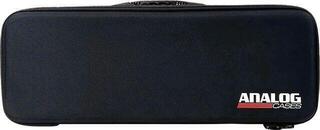

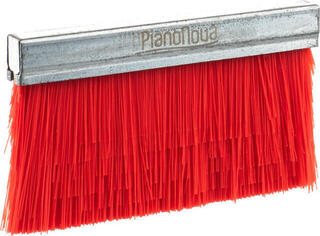
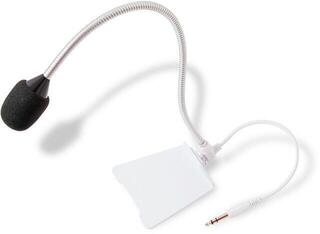


All reviews come from verified customers who have purchased a product from us in the past.
AI summary of reviews
Based on the number of reviews: 24
Strengths
- Value for money: Customers consistently praise the product for offering great features and content at its price point, often exceeding expectations.
- Sound quality: The synthesizer is noted for producing excellent sound, with users highlighting its versatility and ability to create a wide range of sounds.
- Feature set: The MiniFreak comes with a rich set of features, including a free VST version, which adds significant value for users.
- User-friendly: The controls are described as clear and easy to understand, making it suitable for new users to synthesizers.
Weaknesses
- Keyboard quality: One customer found the built-in keyboard to be weak, suggesting that connecting an external MIDI keyboard resolves this issue.
- Touch button responsiveness: Some users experienced inconsistent responsiveness with the touch buttons for play/stop, occasionally requiring multiple presses or registering double presses.
What customers repeat
Verdict
Documents
Instructions for use
Manufacturer information
Safety instructions
Please refer to the user manual for the specific safety instructions for this product.


