Albania
 Argentina
 Australia
 Austria
 Belgium
 Bosnia and Herzegovina
 Brazil
 Bulgaria
 Canada
 Chile
 Colombia
 Croatia
 Czech Republic
 Denmark
 Estonia
 Finland
 France
 Germany
 Greece
 Hungary
 Ireland
 Italy
 Latvia
 Lithuania
 Luxembourg
 Mexico
 Moldova
 Montenegro
 Netherlands
 New Zealand
 North Macedonia
 Norway
 Philippines
 Poland
 Portugal
 Romania
 Serbia
 Slovakia
 Slovenia
 South Africa
 Spain
 Sweden
 Switzerland
 Turkey
 Ukraine
 United Kingdom
 United States of America


Universal Sewing Machine Needles
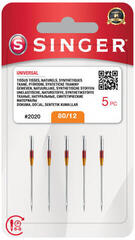
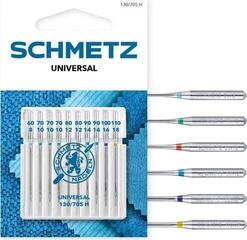
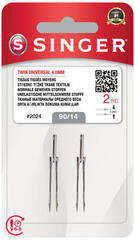
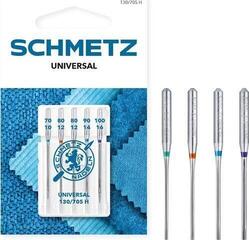
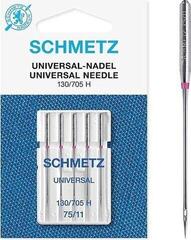
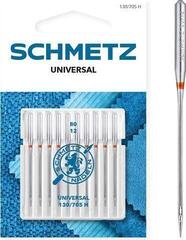
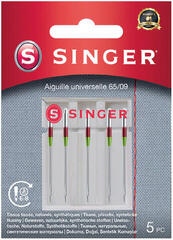
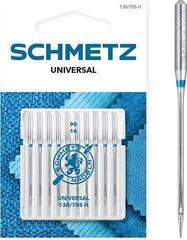
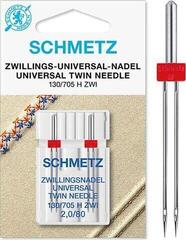
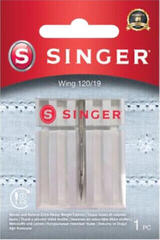
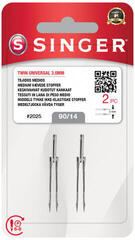
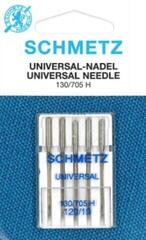
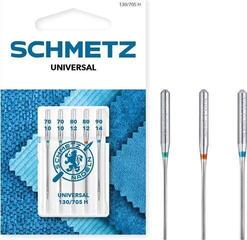
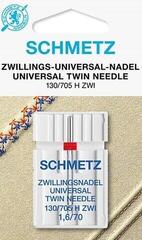
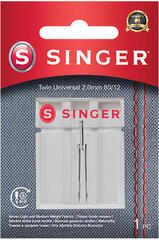
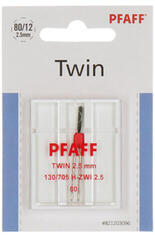
Universal Sewing Machine Needles are standard machine needles with a slightly rounded point that can handle woven fabrics and most knits. Here you’ll find Singer, Schmetz and Pfaff needles in the 130/705 H system, which is used by domestic sewing machines from all common brands. Sizes range from 60 to 120, in packs containing a single size as well as sets of assorted sizes. There are also universal twin needles with a needle spacing of 1.6 to 4 mm, which sew two parallel rows of stitches at the same time.
Which size of Universal Sewing Machine Needles should you choose?
The number on the needle indicates the diameter of the blade: 100 corresponds to 1 mm, so a size 80 needle measures 0.8 mm. The second number after the slash, as in 80/12 or 90/14, gives the same size in the American numbering system. For thin, delicate fabrics, choose a fine needle in size 60 to 70 with a fine thread; for thick fabrics, choose a needle in size 100 to 120 with a thicker thread.
The thread must pass easily through the eye of the needle without getting stuck. If you don’t know which fabric you’ll sew most often, choose a set of assorted sizes, such as 70 to 100.
How do you recognise a universal needle, and when should you replace it?
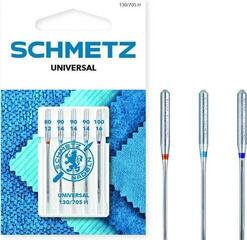
Singer marks universal needles with a red band and uses another colour to indicate the size: green for 70, orange for 80, blue for 90, purple for 100 and yellow for 110. Schmetz universal needles have no colour marking for the needle type; their coloured band indicates only the size. Singer recommends changing the needle after 6 to 8 hours of sewing, depending on the type of fabric.
Stretch knits and lycra, denim and leather require specialist needles. Some overlock and coverstitch machines need needles from a different system, such as ELx705, so check your machine’s manual before buying. You’ll find all types in the sewing machine needles category.
What is a universal twin needle used for?
A twin needle has two needles attached to a single shared shank and sews two parallel rows of stitches at the same time. It is suitable for hems and decorative topstitching, and replaces a coverstitch machine’s cover stitch on knit fabrics. Needle spacing of 1.6, 2, 3 or 4 mm determines how far apart the rows of stitches will be. Singer lists its twin needles as suitable for most domestic sewing machines.