 Albania
 Argentina
 Australia
 Austria
 Belgium
 Bosnia and Herzegovina
 Brazil
 Bulgaria
 Canada
 Chile
Chile
 Colombia
 Croatia
 Czech Republic
 Denmark
 Estonia
 Finland
 France
 Germany
 Greece
 Hungary
 Ireland
 Italy
Italy
 Latvia
 Lithuania
 Luxembourg
 Mexico
 Moldova
 Montenegro
 Netherlands
 New Zealand
 North Macedonia
 Norway
 Philippines
 Poland
 Portugal
 Romania
 Serbia
 Slovakia
 Slovenia
 South Africa
 Spain
Spain
 Sweden
 Switzerland
 Turkey
 Ukraine
 United Kingdom
 United States of America



NANO Eurorack: how a modular synthesizer works
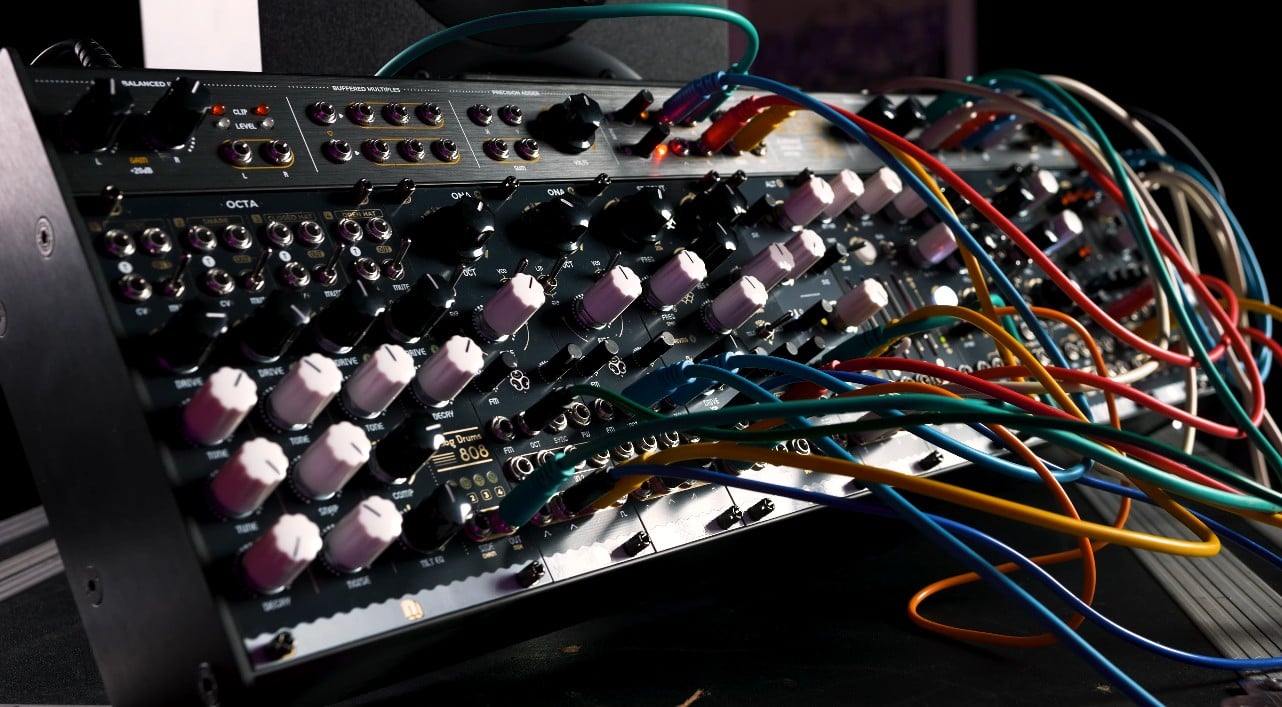
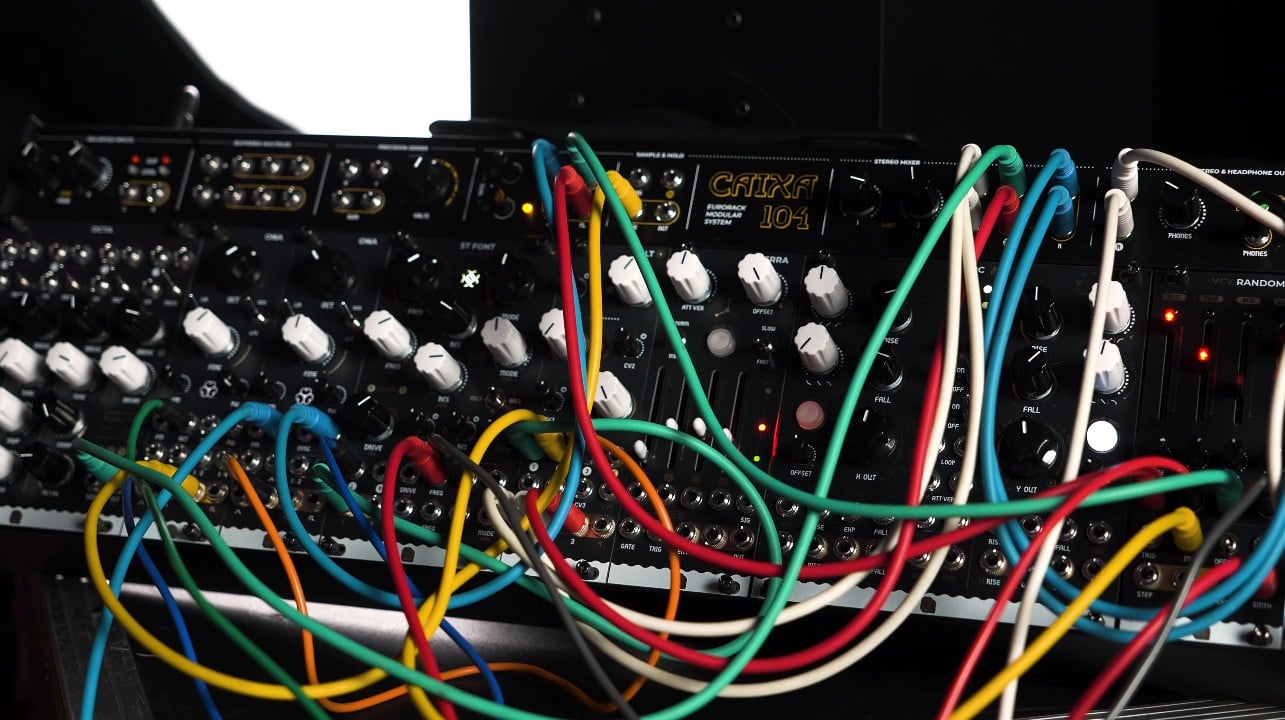
At first glance a modular synthesizer looks like a panel from a spaceship. A pile of knobs, dozens of inputs and cables running across it all from nowhere to nowhere. That is exactly why so many people never get into one even though they want to, and exactly why Viktor from the band Fvck_Kvlt took a complete Eurorack system from NANO into the new episode of No Headroom and went through it module by module.
The full episode is on our YouTube channel. What follows is a breakdown of what the system contains, what each module does and how a beat actually gets built out of it. And since modular is a subject you can get lost in by the first sentence, we will start from the ground up.
What Eurorack is and why it looks so complicated
Eurorack is a format defined in 1995 by the German company Doepfer, which released the first system built to it, the A-100, a year later. It is not a brand or a particular instrument but an agreement on dimensions and power, thanks to which you can put modules from any manufacturer into one rack. There are now over 15,000 of them from more than 600 brands, from garage enthusiasts all the way to Moog and Roland.
The whole thing rests on two numbers. The height is always 3U, which is 128.5 mm, and the width is counted in HP, where 1 HP = 5.08 mm. So when you hear that a case is 104 HP, its internal width is roughly 53 cm. Everything else connects with plain 3.5 mm jacks, and that is the main difference from an ordinary synthesizer or analogue synth. In a modular there is no fixed signal path. Whatever you send wherever will happen, and that is the source of both the freedom and the apparent chaos in the photos.
The case is the first thing you choose
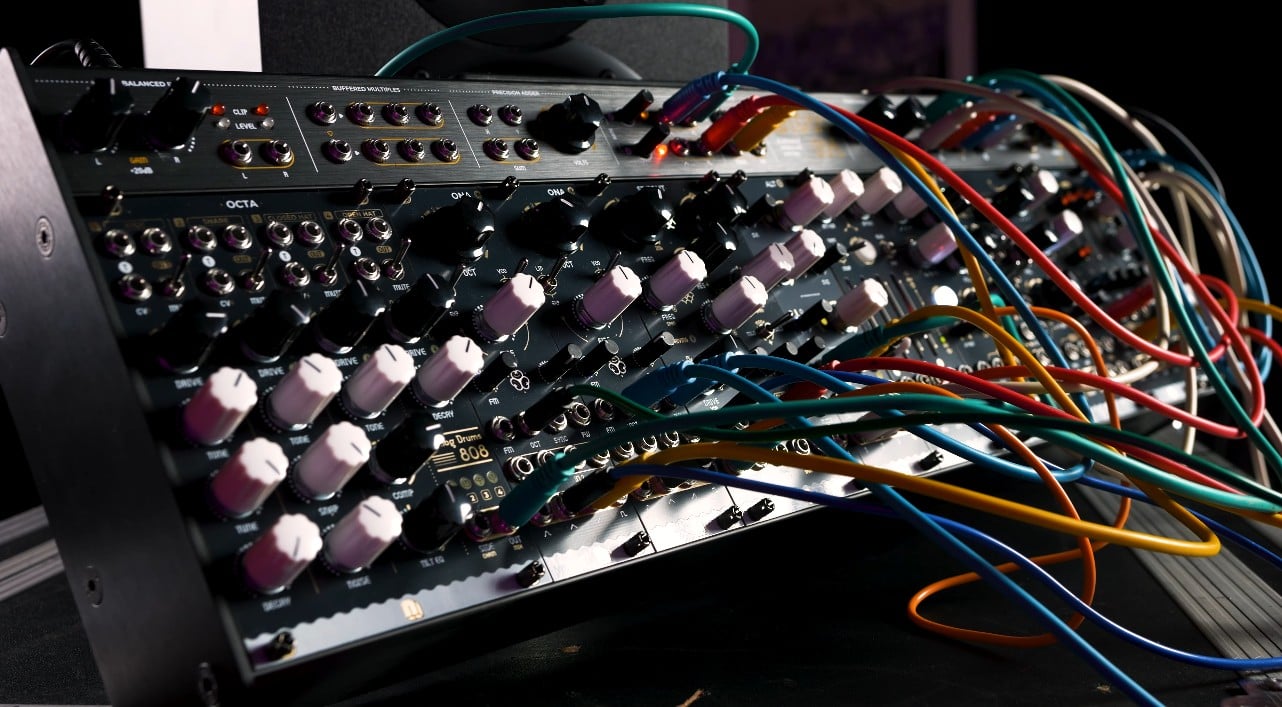
The system in the video is built around the NANO CAIXA 104, a 104 HP case, which is enough for roughly 10 modules depending on their width. The important part is that it is not an empty box. Inside you already get power for all the modules, a mixer, an LFO, sample and hold, a stereo output and an input for bringing sound in from outside. All you add is sound sources and you have a finished instrument, with no need to work out how to power it.
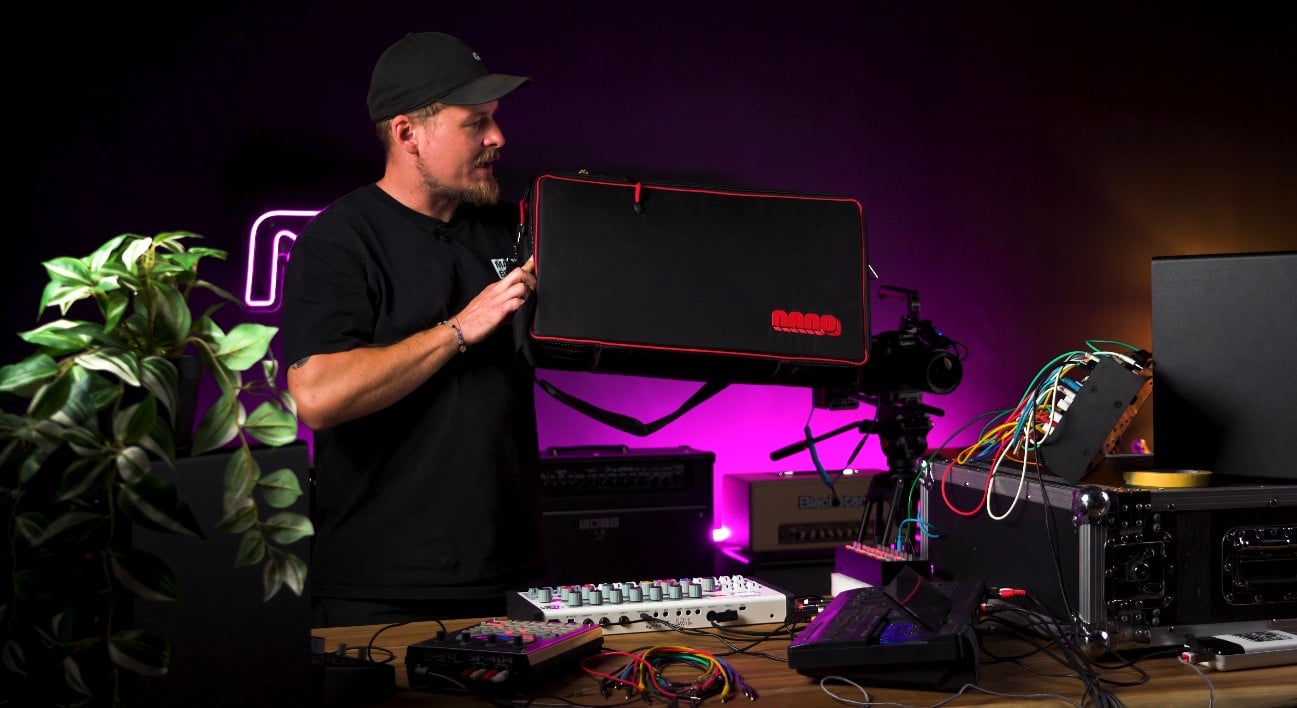
The second advantage is portability. Plenty of people mount their modules into old travel suitcases, which has a charm of its own, but a case you simply close and carry. The system can be packed up still patched, pulled out on site and played straight away. In a modular, where unplugging and replugging 30 cables takes longer than the playing itself, that is no small thing.
Where the sound comes from
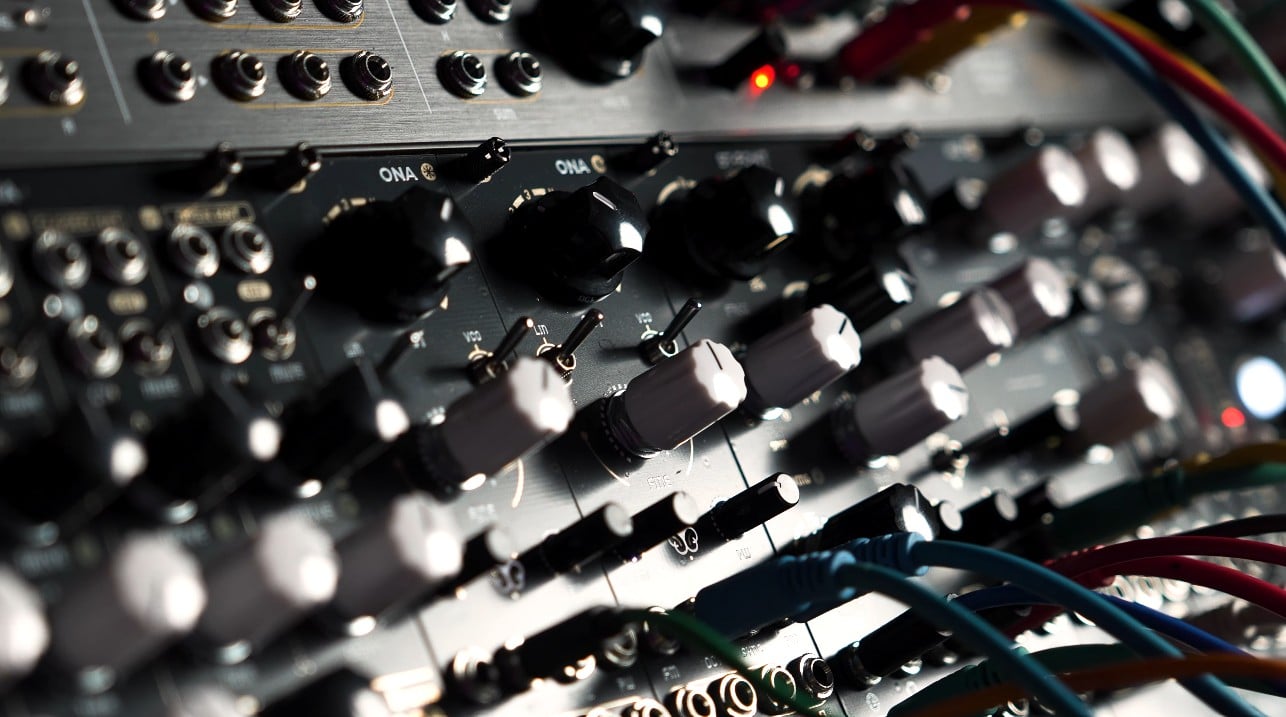
The foundation is the NANO ONA, an analogue oscillator. It is the part that actually produces a tone, everything else merely does something to it. Two ONA units run at once in the video, one for the melody in the upper register and one for the bass line, and the bass is where it convinces most. It has the usual octave switch, fine tuning underneath it and an FM input, so feeding another signal into it sends it off into sounds that have little left to do with the original note.
Once you have a tone you need to shape it, and shaping is what the NANO ST·FONT filter is for. It is the stereo successor to the older FONT module, which you can still buy on its own if mono is enough for you. You set the frequency, the resonance and the mode, meaning whether it passes the bottom, the middle or the top, and each of those three has its own CV input with an attenuator, a control for how strongly the modulation acts. On top of that it has an offset for detuning the left and right sides against each other, and its own drive. It is also the module you can lose an entire evening to without plugging in anything else.
Third in the chain is the NANO ALT, a four-channel amplifier. It sounds dull, but it is exactly what you use to balance things so the bass does not vanish and the melody does not cut your ears off. It has 4 inputs, 4 outputs and 4 CV inputs, so you control each channel’s level with voltage rather than by hand. The fourth channel works as a sum, which makes it a small mixer as well. If you need proper mixing, there is also the NANO Performance Mixer.
What sets the whole system in motion
The NANO SERRA is an envelope, an ADSR. It has 4 sliders with which you set how fast the note comes in, how it falls, at what level it holds and how long it rings out. Without an envelope you get a continuous tone, with one you get a hit, a pad or anything in between. A manual button fires it by hand without a sequencer.
The NANO ARC is a dual function generator and could comfortably work as an instrument on its own. You set the rise and fall separately for both sides, choose the curve shape and shift the sides against each other with an offset. In practice you get slow movement in the background out of it as readily as a perfectly ordinary bass line, depending on how far you turn it.
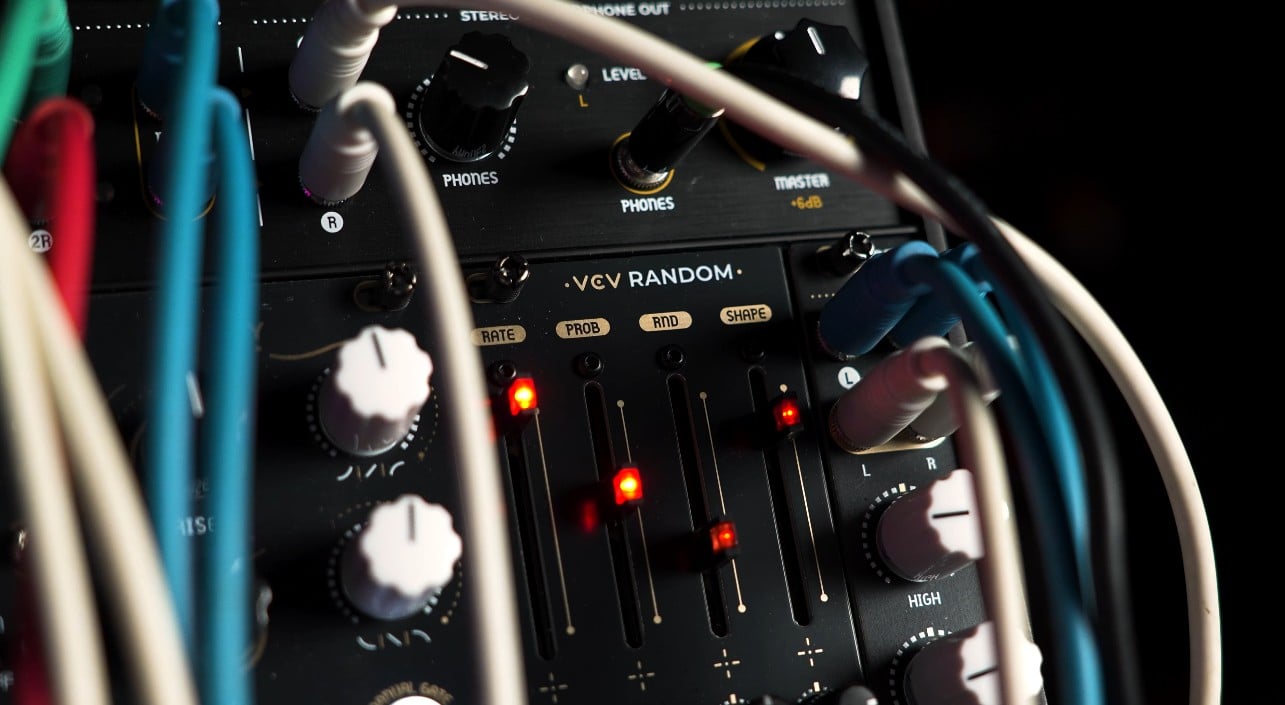
The module doing most of the work in the video is the NANO VCV Random. It has 4 sliders, rate, probability, randomity and shape, meaning how often something changes, how likely it is, how far it goes and along what curve. Patched into the filter frequency, it starts generating glitches and movement on its own that you could never produce by hand.
When you want drums too
The NANO OCTA is an analogue drum module in the spirit of the 808. It has 4 channels, namely kick, snare and closed plus open hi-hat, each with its own drive and its own controls on top, tuning and decay on the kick for instance, snap and noise on the snare. Every channel has its own output, there is a shared stereo output as well, and everything can be modulated through CV inputs. The nicest touch is the mute switch on each track, because that is what turns the module into something you can perform on. It went unused in the video in the end, since an Erica Synths drum machine suited the jam better and already has an episode of its own.
How the system is patched
The whole rack is driven by a small Korg SQ-1 step sequencer, even though the case has its own LFO and randomiser. The reason is practical: the sequencer keeps time and shares it with the rest of the gear on the desk. The two ONA units carry the melody and the bass, with only the upper line going into the ST·FONT filter while the bass bypasses it. Levels are balanced through the ALT, randomness comes from the Random patched into the filter frequency, and the result runs through a tape mixer with a delay from an SP-404 MKII on the aux send. Connecting all of it takes a decent stock of patch cables.
What went unused is just as telling. The OCTA gave way to the Bullfrog, while the SERRA and the ARC lost out to the length of the video. Viktor got the system, never opened the manual, spent 2 hours poking around in it, and the beat you hear in the video came out of that poking. With modular that is a perfectly normal way to learn, because theory tells you what a module does but not how it will sound once you patch it into another one.

5 things worth knowing about Eurorack
1. The format was defined by Doepfer in 1995 and its first system, the A-100, followed a year later. There are now over 15,000 modules from more than 600 manufacturers, so you are not buying into one brand’s closed ecosystem.
2. HP is the unit of width and equals 5.08 mm. A 104 HP case therefore has roughly 53 cm of space inside. Count how many modules will fit accordingly.
3. The 3U height, meaning 128.5 mm, does not come from the music world. It is taken from the industrial Eurocard standard for plug-in cards, and that is also where the "Euro" in the name comes from.
4. Pitch works on a 1 volt per octave basis. Feed in a volt more and the oscillator jumps exactly one octave. It is this agreed value that lets modules from different manufacturers understand each other.
5. There is no correct way to patch. Audio, control voltage and trigger pulses all run through the same 3.5 mm jacks, so you can send sound where control is expected and the other way round. Most of the interesting things in modular happen exactly like that.
What the system is missing
What the rack noticeably lacks is an effects unit, which is why the delay had to come in from an external sampler. NANO does offer one, called the FUM Stereo Effects Processor. The NANO CEQ, a three-band equaliser with a compressor for pulling the bass and the top end into place mid-performance, earns its space too. If you are assembling a system yourself, those two are the wrong places to economise.
Is it worth getting into
Let us be straight about it: a modular is not an everyday instrument. Viktor is a DJ and cannot picture producing his own tracks on one in the studio, yet after 2 weeks with it at home he admitted he had not had that much fun in a long time and would keep the system. There is probably no more accurate description of modular than that. You are not buying a more efficient instrument, you are buying a different way of getting to music.
The sensible move is to start with a set where the case and the first modules arrive together and play straight away, then simply add what you find missing. Whether you stay with NANO or start mixing brands makes no difference, because Eurorack is a standard and nothing ties you down. Behringer is currently the cheapest route to your first modules, Bastl Instruments are made by a Czech team in Brno and have a signature you spot instantly, and Roland drags its classic eighties sounds into the modular format. If you are only tasting and do not want to commit much, look at the most affordable options, otherwise the whole modular systems range is in one place. One thing is worth sorting before the next module, and that is monitoring, because half of what a filter does will simply pass you by on laptop speakers. Decent headphones or studio monitors do more here than anything else. And if modular is your first serious step into production, it pays to start from the back, with How to start producing music at home, How a beat is built and How to set up a home studio.